



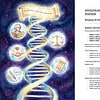
ENLIGHTENMENT IDEAS & THE DECLARATION – The DNA of Liberty
$12.00
DNA metaphor traces Enlightenment ideas to Declaration. Stations, mutations, project. Grades 3-12. 132 pages. Cross-curricular, 250th anniversary ready.
- DNA Metaphor System: Makes philosophy visual and accessible.
- Bridge & Stations: Trace idea transmission and key thinkers.
- Mutation Lab & Deletion: Analyze adaptations and omissions.
- Children’s Book Project: Creative synthesis of one idea’s journey.
- 132+ Pages: 70 student dossier, 60+ teacher guide.
- Three-Tier Differentiation: Grades 3-5, 6-8, 9-12.
- Cross-Curricular Links: Science, ELA, Art, Math integration.
- Engaging & Memorable: Forensic theme hooks all learners.
- Standards-Aligned: C3, Common Core, historical/scientific thinking.
Page count: 152 pages
- Grade
- Family Style, 3rd, 4th, 5th, 6th, 7th, 8th, High School (9-12)
- Homeschool Style
- Any Styles, Family Style, Classical & Traditional, Eclectic, Unit Study
- Parent Involvement
- Collaborative (Parent Guided), Self-Led for Students
- Product Format
- Digital Download
- Resource Type
- Core, Supplemental
- Worldview
- Neutral Worldview
Description
Trace the intellectual DNA of the Declaration back to its Enlightenment ancestors.
Enlightenment Ideas & The Declaration: The DNA of Liberty uses an innovative scientific metaphor to transform abstract 18th-century philosophy into concrete, memorable learning. Students become Historical Geneticists conducting forensic investigations to trace which ideas in the Declaration came from which Enlightenment thinkers—and how those ideas mutated when they crossed the Atlantic.
Philosophy is notoriously difficult to teach. Students struggle with abstract concepts, dense texts, and the question “why does this matter?” This product solves all three problems by using a metaphor students already understand: genetic inheritance.
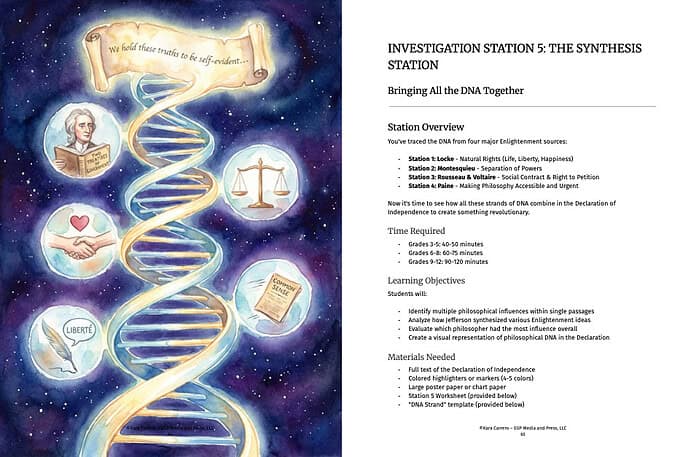
Just as children inherit DNA from their parents, the Declaration inherited “intellectual DNA” from Enlightenment philosophers. Just as genetic mutations create variations, Jefferson and Congress adapted European ideas to American circumstances. Just as genetic deletion can be harmful, removing the anti-slavery clause created a flaw in the founding document.
Students get it immediately because the metaphor is concrete, visual, and familiar.
The Investigation:
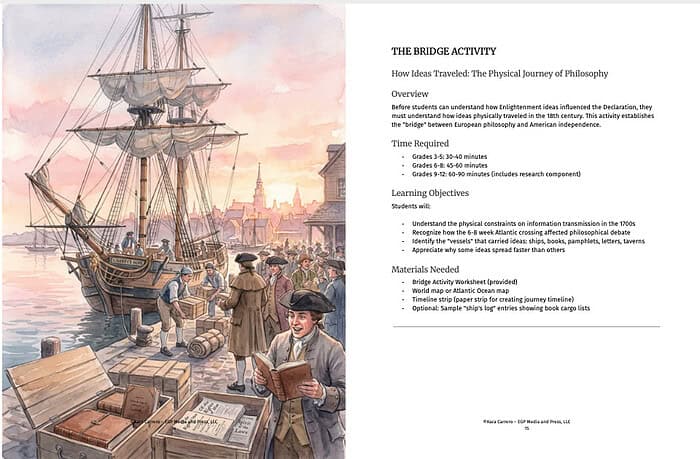
THE BRIDGE ACTIVITY (30-45 minutes) Understanding how ideas physically traveled:
- Books were expensive, pamphlets were cheap (why Common Sense mattered more than Locke’s treatises)
- The “Republic of Letters” connected colonial intellectuals
- Ships took 6-8 weeks to cross the Atlantic
- Ideas spread through taverns, churches, town meetings
- Mapping the transatlantic intellectual network
STATION 1: John Locke – The Father of Natural Rights (45-60 minutes)
- Key DNA: “Life, Liberty, and Property”
- Natural rights philosophy
- Consent of the governed
- Right to revolution
- Direct influence on Jefferson
- Primary source: Second Treatise of Government (1689)
STATION 2: Montesquieu – The Architect of Separation (45-60 minutes)
- Key DNA: Separation of powers
- Checks and balances
- Prevention of tyranny through structure
- Influence on governmental design
- Primary source: Spirit of the Laws (1748)
STATION 3: Rousseau & Voltaire – The Social Contract & Free Thought (45-60 minutes)
- Rousseau’s DNA: Popular sovereignty, social contract, general will
- Voltaire’s DNA: Freedom of speech, religious tolerance, criticism of tyranny
- How both influenced revolutionary thought
- Primary sources: The Social Contract (1762), Voltaire’s essays
STATION 4: Thomas Paine – The Catalyst (45-60 minutes)
- DNA: Direct, accessible language about independence
- Common Sense (January 1776) as game-changer
- Why 120,000 copies sold in a population of 2.5 million
- Paine’s influence on timing of independence
- Primary source: Common Sense excerpts
STATION 5: Synthesis – Tracing DNA Markers (45-60 minutes)
- Identify which phrases in Declaration came from which philosopher
- Create visual DNA map connecting ideas to sources
- Understand Jefferson as synthesizer, not original thinker
- Recognize unique American adaptations
THE MUTATION LAB (60-90 minutes) Analyzing how ideas changed:
- Mutation 1: Locke
- What does it reveal about American values?
- Mutation 2: Rousseau
- Mutation 3: Paine
THE LETHAL DELETION (30-45 minutes) Understanding harmful genetic deletion:
- The anti-slavery clause as vital “DNA” that was deleted
- Why this deletion created a flaw in the organism (nation)
- How this contradiction haunts America’s founding
- Connecting to ongoing work toward equality
CULMINATING PROJECT: The DNA Children’s Book
What’s Included:
STUDENT DOSSIER (70+ pages):
- The Bridge Activity materials
- All five investigation station materials
- Primary source excerpts (age-appropriate)
- Enlightenment philosopher “profiles”
- DNA tracing worksheets
- Mutation Lab analysis guides
- Visual DNA mapping templates
- Children’s Book project materials and rubric
- Reflection questions
TEACHER GUIDE (60+ pages):
- Complete historical context on each philosopher
- Implementation strategies (5 different approaches)
- Three-tier differentiation (Grades 3-5, 6-8, 9-12)
- Discussion facilitation guides
- How to teach philosophy accessibly
- Answer keys with sample responses
- Assessment options
- Extension activities
- Cross-curricular connections (Science, ELA, Art, Math)
- Complete bibliography
- Standards alignment
Total: 132 pages of comprehensive philosophy investigation
Three-Tier Differentiation:
Grades 3-5 (Young Detectives):
- Focus on 3 main philosophers (Locke, Montesquieu, Paine)
- Simplified vocabulary and concrete examples
- Hands-on manipulatives and visual aids
- Illustrated projects and oral presentations
Grades 6-8 (The Investigators):
- 4-5 philosophers with deeper analysis
- Primary source excerpts with scaffolding
- Small group analysis and comparison charts
- Written analysis and multimedia presentations
Grades 9-12 (Forensic Analysts):
- All philosophers plus historiographical debate
- Full primary source texts
- Socratic seminars and scholarly research
- Research papers and philosophical essays
Cross-Curricular Connections:
SCIENCE:
- Genetics and heredity (DNA, inheritance, mutation)
- Scientific method (hypothesis, evidence, conclusion)
- Evolution and adaptation concepts
ENGLISH LANGUAGE ARTS:
- Primary source close reading
- Persuasive rhetoric and argumentation
- Author’s purpose and bias identification
- Creative writing (Children’s Book project)
SOCIAL STUDIES:
- Enlightenment history and philosophy
- Transatlantic intellectual exchange
- Revolutionary political thought
- Comparative government systems
MATHEMATICS:
- Timeline construction and sequencing
- Data analysis (comparing philosopher influences)
- Geographic mapping (idea transmission routes)
ART:
- Book illustration and design
- Historical period visual analysis
- Political cartoon interpretation
- Visual metaphor creation
Why This Works:
✓ Makes Philosophy Concrete: DNA metaphor creates visual, tangible understanding
✓ Multiple Entry Points:Visual, verbal, kinesthetic, logical learners all engaged
✓ Memorable: Science/history combination sticks in memory
✓ Accessible: Complex philosophy becomes understandable for all levels
✓ Engaging: Forensic investigation theme hooks students
✓ Transferable: Students apply these thinking skills beyond this unit
Perfect For:
- Declaration of Independence units
- Enlightenment history instruction
- Political philosophy introduction
- Cross-curricular team teaching
- Gifted programs (sophisticated synthesis)
- Students who struggle with traditional philosophy instruction
- STEM students connecting to humanities
The “Aha!” Moment:
Students discover that:
- Jefferson didn’t invent these ideas—he synthesized them
- Revolutionary philosophy had been developing for nearly a century
- Ideas are inherited and adapted, not created from nothing
- The Declaration is the American “child” of European “parents”
- Even founding documents have an intellectual genealogy
This transforms understanding from “Jefferson wrote something amazing” to “Jefferson brilliantly synthesized a century of philosophical development and adapted it to American circumstances.”
Educational Honesty:
The product addresses:
- Not all Enlightenment thinking was progressive (Locke owned shares in slave trade company)
- Philosophers’ ideas about liberty coexisted with colonialism
- Jefferson applied Enlightenment principles selectively (slavery contradiction)
- Revolutionary philosophy was limited to property-owning men
- The work of extending these principles to all people is ongoing
What You Get:
PDF format, ready to print or use digitally:
- 132 total pages
- Station materials organized for easy printing
- High-quality philosopher portraits
- Visual DNA mapping templates
- Primary source excerpts with context
- Children’s Book project examples
- Comprehensive rubrics
- Answer keys with sample responses
- Bibliography with links to original sources
Standards Addressed:
- C3 Framework: All four dimensions (Questions, Concepts, Sources, Conclusions)
- Common Core ELA: Reading, Writing, Speaking & Listening standards
- Historical Thinking: Sourcing, contextualization, periodization
- Scientific Thinking: Observation, analysis, conclusion
Perfect for the 250th Anniversary:
Understanding the Enlightenment DNA of the Declaration helps students recognize that revolutionary ideas have a history—they didn’t appear from nowhere on July 4, 1776. This depth of understanding is exactly what the 250th anniversary should inspire.
This product transforms philosophy from abstract and boring to concrete and fascinating. Students remember the DNA metaphor for years and apply these thinking skills throughout their education.
Additional information
| Grade | Family Style, 3rd, 4th, 5th, 6th, 7th, 8th, High School (9-12) |
|---|---|
| Homeschool Style | Any Styles, Family Style, Classical & Traditional, Eclectic, Unit Study |
| Parent Involvement | |
| Product Format | |
| Resource Type | |
| Worldview |
Only logged in customers who have purchased this product may leave a review.
Vendor Information
- Store Name: EGP Media and Press
- Vendor: EGP Media and Press
- No ratings found yet!
-

Fauvism Art Copy work and coloring page pack for grades K-12
5-day Fauvism art copy work guide with 4 difficulty levels, frame pages for art activities, and flexible learning options. Perfect for ages 5+ homeschool and classroom use.

-
“Miss Hickory” Novel Study and Activity Guide
Make Miss Hickory come to life! This novel study helps students live life alongside Miss Hickory and how she journeys through the seasons. It’s a hands-on guide to have fun while reading the book while…
-
The Wild Robot STEM and Cross-Curricular Adventure
Perfect For: Homeschool families wanting shared learning experiences Parents looking for meaningful screen-free activities Summer learning that doesn’t feel like “school” Kids who love robots, animals, or adventure stories Format: Printable PDF | Grade Range:…
-
Reading Recipes Like a Historian: Recipe Archaeology and Food Historiography
Teach sophisticated historical thinking through food historiography! This 106-page toolkit shows students grades K-12 how to analyze historical recipes as primary sources revealing economic pressure, daily realities, and the context behind historical decisions. Includes complete…
-
Escape the King’s Tyranny Declaration Escape Room Grievances Activity Grades 3-12
Students take on the role of a colonial aide with one mission: document six acts of tyranny and deliver the evidence to Congress before dawn. This no-prep, print-and-play paper escape room challenges grades 3-12 to…
-
Charlotte’s Web Project-Based (PBL) Rhetoric & Spider Science K-5 Novel Study
Charlotte didn’t just love Wilbur. She ran a strategic persuasion campaign to save him and now your students will too. A comprehensive K-5 project-based novel study covering spider science, rhetoric, E.B. White’s craft, and the…
DIGITAL PRODUCT REFUNDS
Digital products are not applicable for refunds. Any purchase of a digital product (audio, video, course, download, printable, etc.) is final because we cannot revoke your access to digital content.
PHYSICAL PRODUCT REFUNDS
- This is a multivendor marketplace. As such, each store owner maintains their own refund policy. When purchasing from one of our vendors, you should reach out to them directly to address product concerns. Each of our vendors has their contact information in their store profiles.
- Should you have an issue with a product, please email the store owner directly using the owner information found in their store.
- If you have a problem with an item and are not receiving an appropriate answer from a vendor, please contact our site at [email protected] to escalate the issue.
- Homeschool Resource Co. is not able to troubleshoot our vendor’s products as we do not own them. However, we can reach out to the store manager on your behalf.
You may also like…
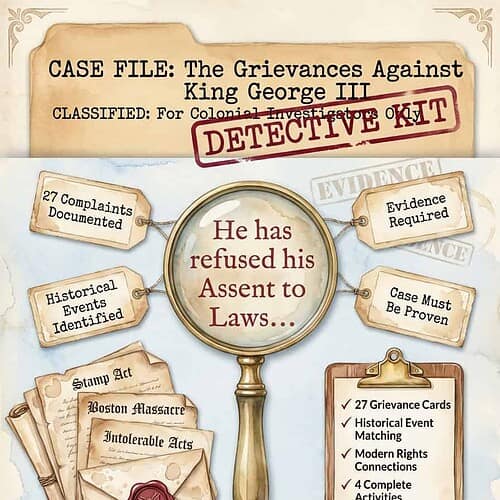
The Grievances Detective Kit: Declaration of Independence 250th Anniversary Edition
Transform the Declaration of Independence into a hands-on investigation! Students become colonial detectives examining all 27 grievances against King George III, matching them to historical events (1763-1776), and connecting colonial complaints to modern Constitutional protections.…
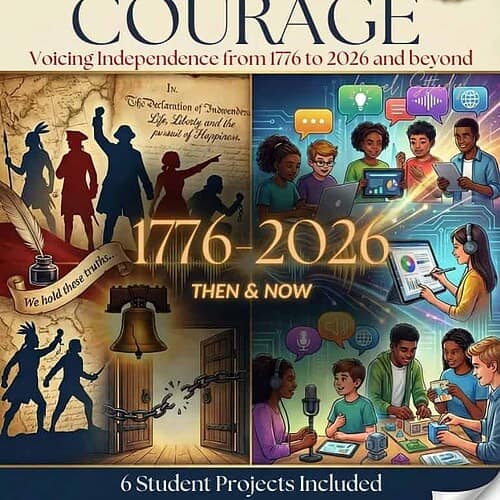
Revolutionary Courage: Voicing Independence from 1776 to 2026 and Beyond
Celebrate America’s 250th with this complete K-12 Revolutionary War project-based curriculum. Six differentiated student-choice projects explore courage and independence from 1776 to 2026 using primary sources and virtual field trips. Includes teacher guide with 12…
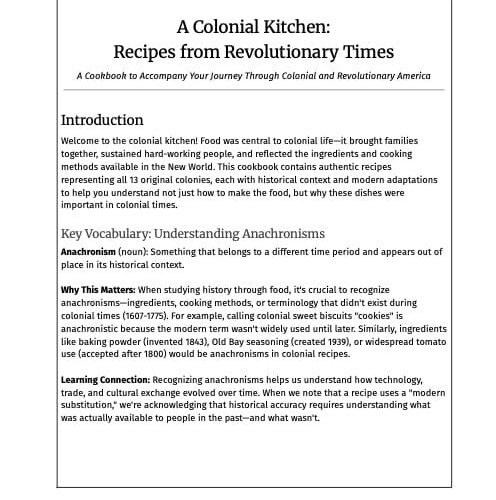
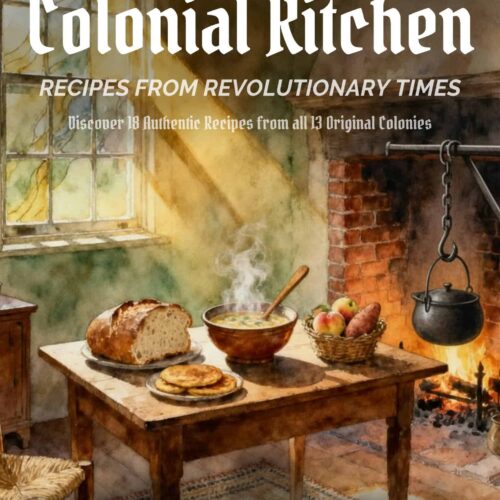
A Colonial Kitchen Cookbook & American History Projects for Teachers & Homeschoolers
Cook, eat, and learn! This educational cookbook brings American history to life with 18 authentic colonial recipes, all adapted for modern kitchens. Complete with historical context, literary connections, and 8 hands-on extension projects, this resource…
Related products
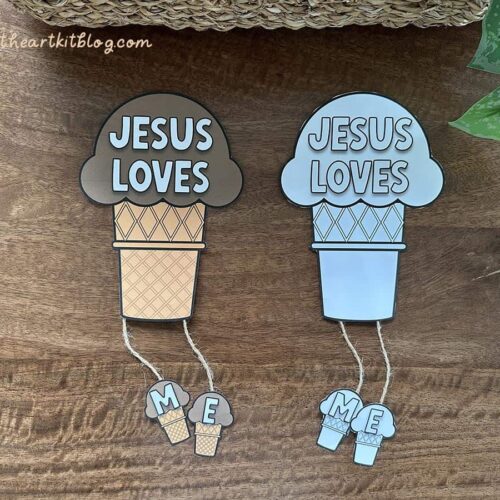
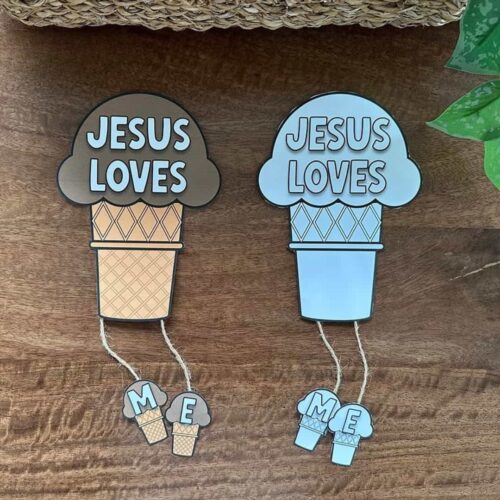
Ice Cream Jesus Loves Me Paper Craft, CUSTOMIZABLE to your child’s name! Coloring Page and Colored Version, PDF, Sunday School Printable, Preschool (Copy)
Ice Cream Jesus Loves Me Paper Craft Printable This printable can be customized to your child’s name as well! We included every letter of the alphabet so you can cut out the letters you need…


Ultimate Bible Study Guides Bundle for Kids
The Ultimate Bible Study Guides Bundle includes 5 different studies to help encourage your kids to study their Bible. Use them individually, or combine them to make your own study!

Kids Bible Story Checklist
Not sure where to start when introducing your kids to Bible stories/characters? Stuck on the same Bible stories and aren’t sure where to go next? Try this Bible Story Checklist for Kids! It includes 60…
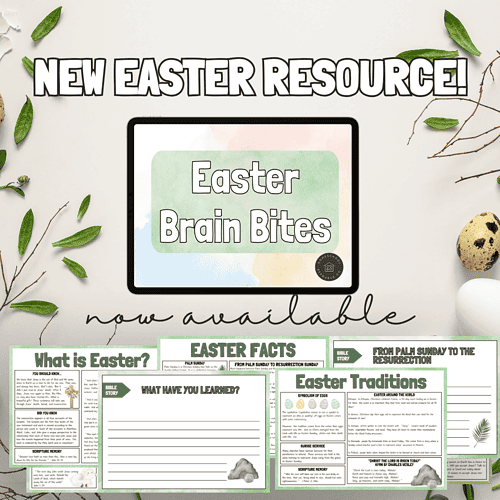
Brain Bites Placemats: Learn About Easter for Elementary Kids
The Brain Bites Placemats: Learn About Easter for Elementary Kids is a great way to introduce and cultivate a Christ-centered Easter celebration with your family.
Ten Frames Printable, Fish Math Resources for Counting, Teacher Tools, Homeschool Activities, Digital Downloads, Aquarium Printable Kids
Make math fun with this Fish Ten Frame! 🐟🫧 Perfect for preschoolers, kindergarteners, and early elementary kids, this printable counting activity helps little learners practice numbers, subitizing, and one-to-one correspondence… all while having fun with…
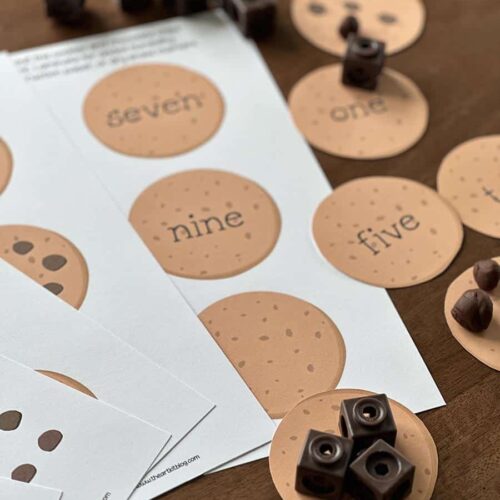
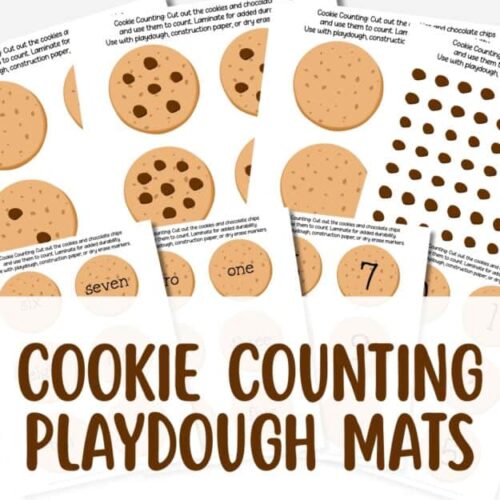
Cookie Counting Cards Printable – Preschool & Kindergarten Math Activity – Fun Number Recognition Game for Kids – Digital Download
🍪 Make Math a Treat! Turn counting practice into a fun, hands-on learning game with these adorable cookie counting cards. Perfect for preschool, kindergarten, or homeschool, kids will love matching the correct number of cookies…
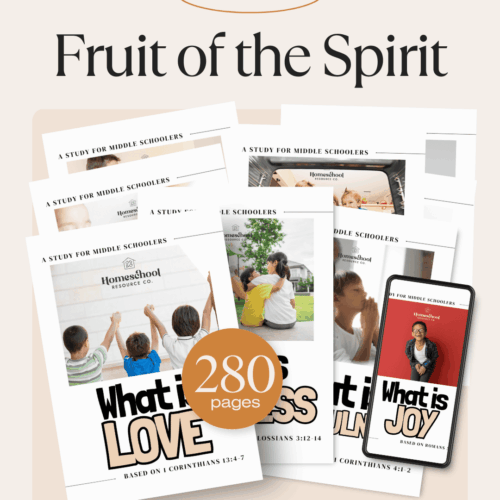
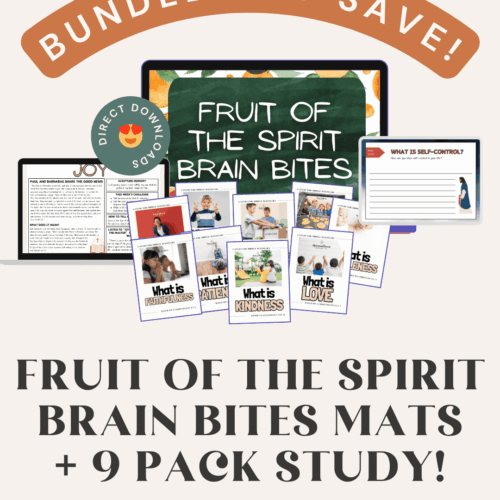
Fruit of the Spirit Bundle
Introducing the Fruit of the Spirit Bible Study Bundle, a comprehensive and engaging, 300-page Bible study designed specifically for middle schoolers and upper elementary kids.
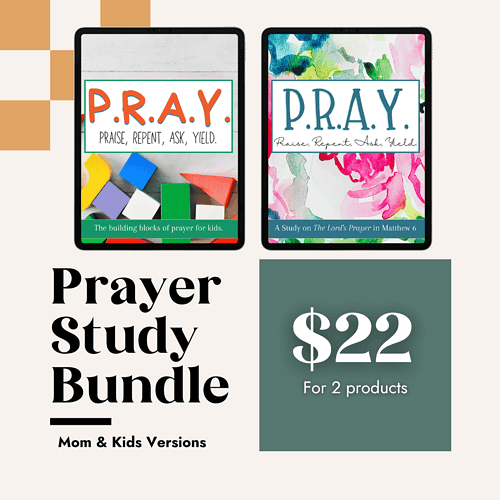
P.R.A.Y. Study Bundle
When should we pray? How should we pray? Why do we pray? Answer these questions, and so many more, through this prayer study bundle for adults with a companion study for Kids.
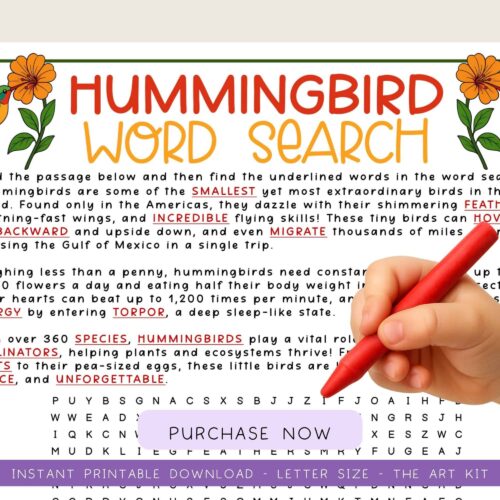
Word Search PDF, Hummingbird Printable, Vocabulary Activities, Word Find Games
Kids love these Printable Hummingbird Word Searches with Fun Facts! 📄 Instant Download | Printable Hummingbird Word Search Looking for a fun and educational activity for kids? This hummingbird word search includes interesting facts and…
Reviews
There are no reviews yet.