❤️ Supporting homeschool families and individual content creators.


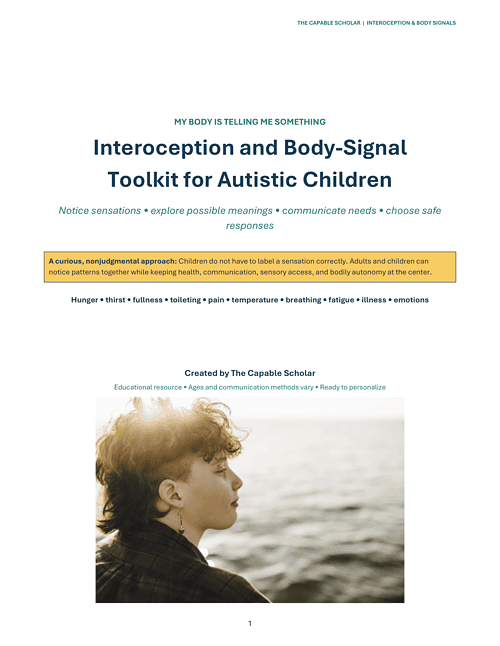
MY BODY IS TELLING ME SOMETHING: Interoception and Body-Signal for Autistic
$17.97
My Body Is Telling Me Something is a neurodiversity-affirming interoception toolkit that helps autistic children notice, communicate, and respond to signals from inside their bodies. Through visual supports, body-signal activities, communication cards, check-ins, and practical planning tools, children can explore hunger,…
My Body Is Telling Me Something is a neurodiversity-affirming interoception toolkit that helps autistic children notice, communicate, and respond to signals from inside their bodies. Through visual supports, body-signal activities, communication cards, check-ins, and practical planning tools, children can explore hunger, thirst, toileting, pain, temperature, fatigue, breathing, emotions, and other body sensations. Designed for parents, homeschool families, special education teachers, therapists, and support providers, the toolkit offers flexible ways for children to participate through speech, AAC, pointing, typing, drawing, writing, or gestures.
Help your child build body awareness and communicate their needs with greater confidence. Get My Body Is Telling Me Something and start exploring body signals together.
Page count: 33 pages
Highlights
- Homeschool Style
- Eclectic
- Parent Involvement
- Guided
- Product Format
- Resource Type
- Supplemental
- Worldview
- Neutral Worldview
- Grade
- 1-5, PreK

Description
My Body Is Telling Me Something An Interoception and Body-Signal Toolkit for Autistic Children
Help autistic children notice, communicate, and respond to important signals from inside their bodies—without pressure to identify every sensation correctly.
My Body Is Telling Me Something is a comprehensive, neurodiversity-affirming interoception toolkit designed to support body awareness, functional communication, self-advocacy, health, and everyday participation. It can be used by parents, homeschoolers, special education teachers, occupational therapists, speech-language professionals, counselors, and other support providers.
Interoception is the ability to notice and interpret internal body sensations. These signals may relate to hunger, fullness, thirst, toileting, pain, body temperature, breathing, heartbeat, fatigue, illness, digestion, muscle tension, movement needs, and emotions.
Autistic children may notice some signals intensely, recognize others very late, experience sensations suddenly, or have difficulty describing what they feel. This does not mean that they are being careless, oppositional, or uncooperative.
This toolkit teaches a gentle three-step process:
- Notice: What do I feel in my body?
- Consider: What are some possible meanings?
- Respond: What safe support can I try?
The resource does not teach children that one body signal always has one meaning. For example, a racing heart could be connected to excitement, fear, physical activity, illness, pain, medication, dehydration, or something else. Children are encouraged to use responses such as “I don’t know,” “Help me check,” and “That did not help.”
Skills and Body Signals Covered
- Hunger and eating needs
- Fullness and eating comfort
- Thirst and hydration
- Bladder and urination signals
- Bowel and constipation signals
- Pain and injury
- Hot, cold, and body temperature
- Breathing and heartbeat
- Fatigue, sleepiness, and energy
- Nausea, digestion, and illness
- Muscle tension and movement needs
- Physical sensations connected to emotions
What Is Included?
- Interoception introduction and caregiver guide
- Respectful adult-language suggestions
- Child participation choices
- Individual Body-Signal Profile
- Whole-Body Check-In
- Notice–Consider–Respond planning pages
- Hunger, thirst, fullness, and toileting worksheets
- Pain and illness communication supports
- Temperature, breathing, fatigue, and digestion pages
- Emotional body-clue activities
- Body-Signal Communication Cards
- Body Map and Location Notes
- Body Detective Pattern Tracker
- Before-and-After Body Comparison
- Adult Observation Without Guessing guide
- School and Nurse Communication Plan
- Medical Appointment Preparation form
- Emergency Warning-Sign Reference
- Personal Body-Support Plan
- Portable Body Check-In Cards
- Blank customizable communication cards
- Home–School Body-Signal Profile
- Four-Week Gentle Practice Plan
- Progress Review
- Research and further-reading page
Children Can Learn to Communicate:
- I notice something
- I don’t know what it means
- Help me check
- Give me time
- I am hungry or thirsty
- I need the bathroom
- Something hurts
- I feel sick
- I need rest
- It is too hot or cold
- It is hard to breathe
- That helped
- That did not help
- I feel worse
- I need medical help
The activities can be completed through speech, AAC, pointing, typing, writing, drawing, gesture, eye gaze, partner-assisted scanning, or adult observation. Children may also choose not to participate or return to an activity later.
Perfect For:
- Autistic children and tweens
- Children with ADHD or sensory differences
- Nonspeaking and minimally speaking children
- AAC users
- Children who have difficulty recognizing hunger or thirst
- Toileting and bathroom-awareness support
- Pain and illness communication
- Emotional and sensory self-awareness
- Occupational therapy
- Speech and language therapy
- Special education classrooms
- Homeschool families
- School nurse communication
- IEP and life-skills instruction
- Parent-professional collaboration
This toolkit does not require children to label sensations correctly before receiving food, water, bathroom access, rest, communication, sensory support, or medical care. Adults are encouraged to remain curious, consider several possible explanations, observe patterns over time, and seek professional guidance for concerning symptoms.
The goal is not perfect body awareness. The goal is to help children notice what may be happening, communicate in a reliable way, try a safe support, and receive appropriate adult or medical help when needed.
Keywords: interoception activities for autism, autism body signals, body awareness activities, interoception toolkit, autism hunger and thirst awareness, toileting interoception, autism pain communication, body check-in for kids, autistic children health communication, sensory body awareness, autism emotional regulation, AAC body signals, special education interoception, homeschool autism resources, occupational therapy interoception, body signal worksheets, neurodiversity-affirming resources, autism self-advocacy, body awareness visual supports, interoception cards
Additional information
| Homeschool Style | |
|---|---|
| Parent Involvement | |
| Product Format | |
| Resource Type | |
| Worldview | |
| Grade |
Only logged in customers who have purchased this product may leave a review.
Vendor Information
- Store Name: The Capable Scholar/ Collegiate Learning
- Vendor: The Capable Scholar/ Collegiate Learning
- No ratings found yet!
-

THE 30-MINUTE HOMEWORK RESET: A Simple Routine to End Homework Battles
The 30-Minute Homework Reset gives parents and tutors a simple, repeatable routine for helping K–12 students start homework, identify priorities, make meaningful progress, and gradually build independence. The five-step routine helps students regulate after school,…

-
EVERYDAY SOCIAL STORIES for Kids with Autism School
EVERYDAY SOCIAL STORIES FOR KIDS WITH AUTISM Help autistic and neurodivergent children navigate everyday situations with 40 practical visual social stories covering school, community, home, and independence. Each one-page story uses clear, concrete language, visual…
-
Autism Writing Success: An 18-Week Multisensory Writing Curriculum
AUTISM WRITING SUCCESS: GRADES 4–8 Build stronger, more confident writing skills with this 18-week multisensory writing curriculum designed for autistic and neurodivergent learners. The curriculum includes 18 complete 55-minute lessons with predictable routines, visual modeling,…
-
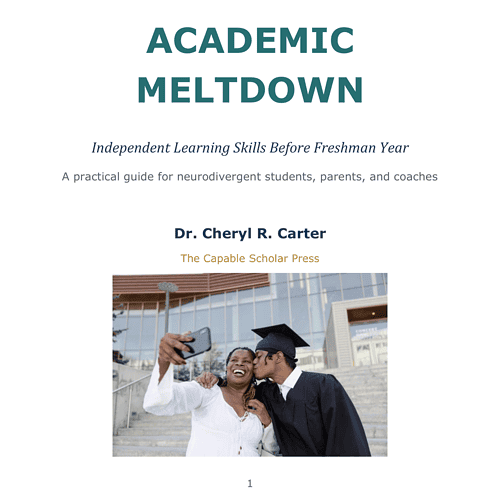
College Without the Academic Meltdown
College Without the Academic Meltdown is a practical, encouraging guide for students who want to succeed in college without becoming overwhelmed, exhausted, or discouraged. Written especially for struggling, anxious, ADHD, autistic, and other neurodivergent learners,…
-
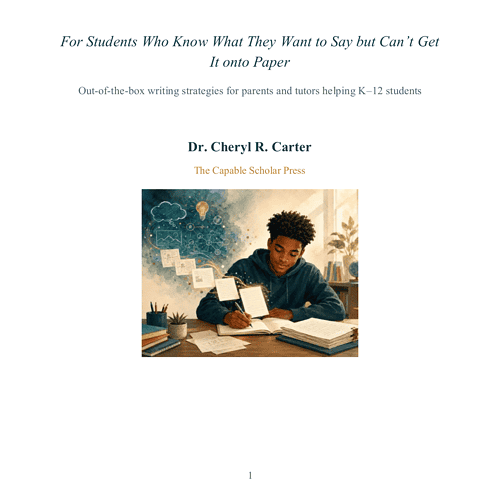
The Capable Writer: For Students Who Know What They Want to Say but Can’t
The Capable Writer Method is a practical, encouraging guide for parents, tutors, homeschool educators, and teachers supporting students who have wonderful ideas but struggle to put them on paper. Written by Dr. Cheryl R. Carter,…
-
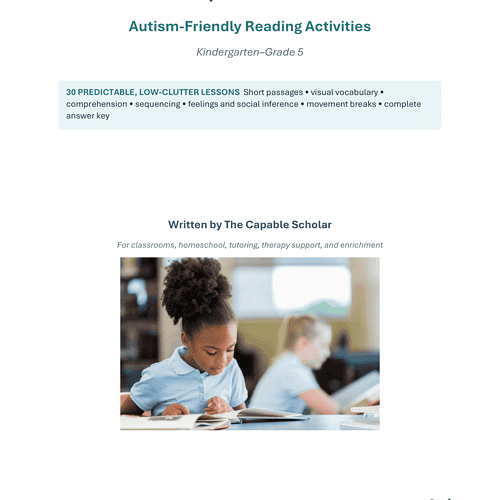
READ, THINK & DO Autism-Friendly Reading Activities Kindergarten–Grade 5
READ, THINK & DO Autism-Friendly Reading Activities K–5 Make reading comprehension more accessible and engaging for autistic and neurodivergent learners with 30 low-clutter reading activities for Kindergarten through Grade 5. Each activity includes a short…
DIGITAL PRODUCT REFUNDS
Digital products are not applicable for refunds. Any purchase of a digital product (audio, video, course, download, printable, etc.) is final because we cannot revoke your access to digital content.
PHYSICAL PRODUCT REFUNDS
- This is a multivendor marketplace. As such, each store owner maintains their own refund policy. When purchasing from one of our vendors, you should reach out to them directly to address product concerns. Each of our vendors has their contact information in their store profiles.
- Should you have an issue with a product, please email the store owner directly using the owner information found in their store.
- If you have a problem with an item and are not receiving an appropriate answer from a vendor, please contact our site at [email protected] to escalate the issue.
- Homeschool Resource Co. is not able to troubleshoot our vendor’s products as we do not own them. However, we can reach out to the store manager on your behalf.
Related products


Healing the Soul: A Devotional Journey Through the Psalms
Healing the Soul: A Devotional Journey Through the Psalms is a deeply transformative 30-day devotional designed to guide you through emotional and spiritual healing using the powerful words of the Psalms. Whether you are struggling with…
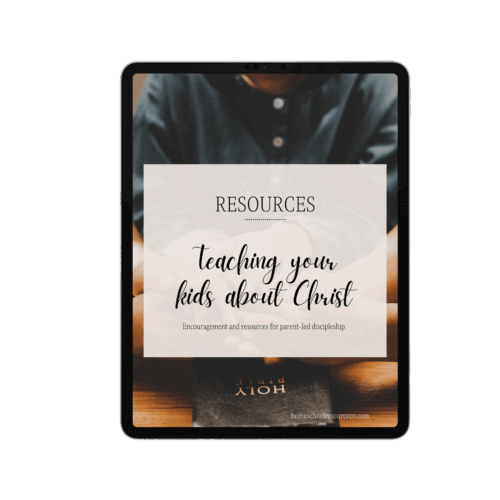
Resource List for Teaching Kids about Christ
These tools and resources are great ways to help wrap your children up in the Lord in all areas of their lives; worldview, education, friendships, discipleship, and more!

Morning Routine for Homeschool Moms
Feeling behind before breakfast — again? This 3-step quick-win toolkit helps you reset your mornings with simple prompts, doable habits, and real-life tools that actually fit homeschool life. You’ll find calm before the chaos —…



Green Homeschool Planner (90+ pages)
The Green Homeschool Planner offers 90+ printable pages including scheduling templates, lesson planners, student tracking, and goal-setting tools to organize your entire homeschool year while reducing planning stress and documenting educational progress.


P.R.A.Y. Study Bundle
When should we pray? How should we pray? Why do we pray? Answer these questions, and so many more, through this prayer study bundle for adults with a companion study for Kids.


Purple Homeschool Planner (90+ pages)
The Purple Homeschool Planner offers 90+ printable pages including scheduling templates, lesson planners, student tracking, and goal-setting tools to organize your entire homeschool year while reducing planning stress and documenting educational progress.
P.R.A.Y. Study for Adults
When should we pray? How should we pray? Why do we pray? Answer these questions, and so many more, through this P.R.A.Y. Study for Adults using the P.R.A.Y. acronym.
Sensory Needs Made Simple Masterclass + Toolkit for Homeschool Moms
Raising a sensitive or sensory-seeking child can feel confusing and overwhelming — especially when every day feels like a guessing game.The Sensory Needs Made Simple Masterclass + Toolkit gives you a clear, practical roadmap for…

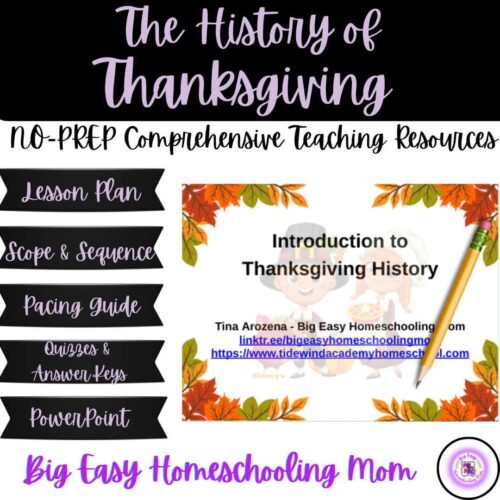
NO-PREP Teaching Resource on The History of Thanksgiving
This NO-PREP Comprehensive Teaching Resource on The History of Thanksgiving includes a lesson plan, scope and sequence, pacing guide, four quizzes with answer keys, and a detailed PowerPoint presentation. Everything you need for a comprehensive…
Reviews
There are no reviews yet.