Storywise Learning
Storywise Learning
☆☆☆☆☆ (0)

Storywise Learning helps homeschool families teach difficult digital-life subjects through adventure stories instead of lectures.

Casper Pieters is an educator, scientist, and author who creates story-based learning for homeschooling families with preteens and young teens. His Bindi & Beam and Team Savv-i adventures turn important topics such as digital citizenship, AI literacy, cyberbullying, media literacy, online safety, and digital well-being into stories young people want to explore.

For homeschool parents, Casper’s approach makes challenging digital topics easier to teach without needing specialist technology knowledge. Stories become natural starting points for family discussion, while ready-to-use Activity Guides, Read-Aloud Living Books, mini-units, printable activities, and optional technology-supported projects allow families to choose what works for their child, learning style, and schedule.

His educational resources align with International Society for Technology in Education (ISTE) standards and encourage critical thinking, creativity, responsible technology use, and independent judgment.

Casper’s goal is simple: make essential digital-life learning engaging, flexible, and accessible to every learner.

Follow Message

All Resources

Showing 1–4 of 4 results

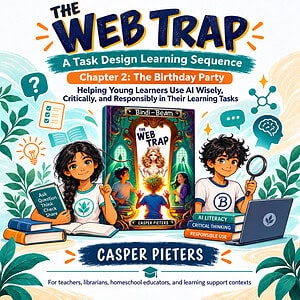
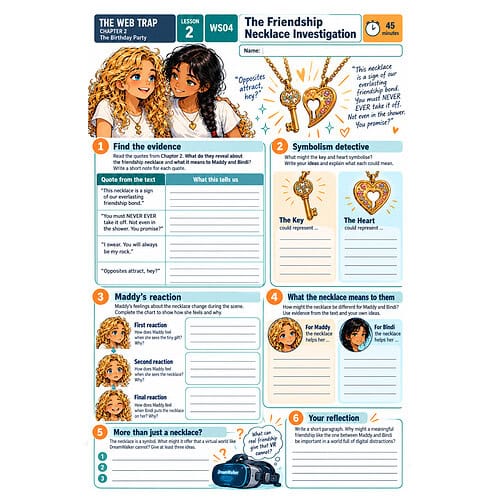
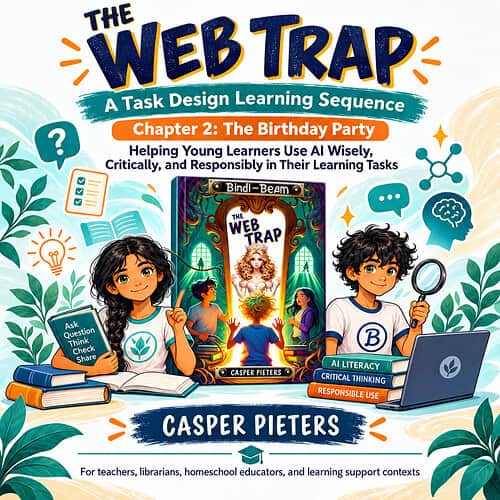
  • Worksheet 04: The Friendship Necklace Investigation explores the emotional significance of the friendship necklace shared by Maddy and Bindi in Chapter 2 of The Web Trap. Through six structured activities, learners examine story evidence, interpret the symbolism of the key and heart pendants, analyze Maddy’s changing emotions, and compare what the necklace means to each girl. The worksheet encourages students to consider what genuine friendship provides that an immersive virtual world cannot. Its purpose is to develop reading comprehension, evidence-based reasoning, empathy, symbolic interpretation, and critical thinking while helping learners recognize the importance of meaningful real-world relationships in an increasingly digital world.A colorful, square illustrated cover for The Web Trap: A Task Design Learning Sequence — Chapter 2: The Birthday Party. Bindi and Beam stand on either side of the adventure book, surrounded by learning materials, books, a laptop, and symbols representing curiosity, critical thinking, and AI literacy. Bindi holds a questioning guide, while Beam examines the world through a magnifying glass. Bright teal, navy, and orange accents create a friendly, adventurous atmosphere. The resource encourages young learners to use AI wisely, critically, and responsibly, with guidance for teachers, librarians, and homeschool educators.

    The Web Trap – AI Literacy Unit

    Think First. AI Second. Using the adventures of The Web Trap to teach young learners how to investigate, question, reason and make independent decisions—with AI supporting their thinking, never replacing it.

    Man speaking and gesturing with hands, casual attire, white brick wall background.
    $8.95 Add to cart
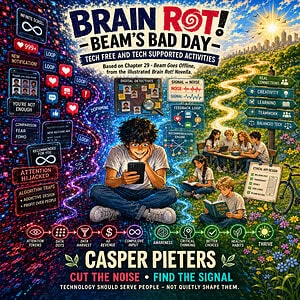
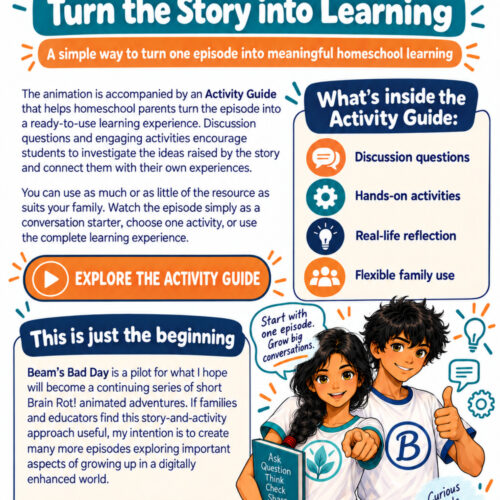
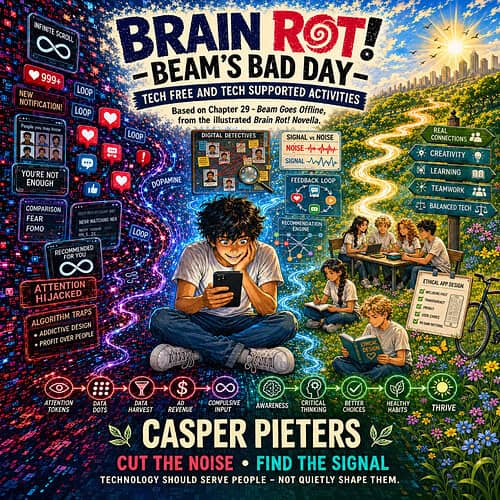
  • A colorful homeschool learning page titled “Turn the Story into Learning” explains how the Brain Rot! animation can be used with an Activity Guide. The page highlights discussion questions, hands-on activities, real-life reflection, and flexible family use. Bindi and Beam appear at the bottom beside friendly digital-themed icons and messages encouraging families to begin with one episode and build meaningful conversations.A vibrant, square comic-style illustration for Brain Rot! – Beam’s Bad Day, contrasting the dangers of addictive technology with the benefits of healthy digital habits. At the centre, Beam sits cross-legged, completely absorbed in his smartphone. To his left, a dark, chaotic swirl of notifications, social media icons and algorithmic traps represents digital distraction and attention hijacking. To his right, a bright, sunlit landscape shows young teenagers reading, collaborating, creating and enjoying real-world connections. Educational panels explore persuasive technology, recommendation engines and ethical app design. The illustration carries the message: “Cut the Noise • Find the Signal”, reminding young people that technology should serve them, not quietly shape their behavior.

    Brain Rot! Persuasive technology mini-unit

    Brain Rot! – Beam’s Bad Day is a story-led digital citizenship learning resource for ages 11–14 that combines a short animated episode with discussion, investigation, and creative activities. Through Beam’s experience with the fictional app…

    Man speaking and gesturing with hands, casual attire, white brick wall background.
    $0.00 Add to cart
  • Engaging homeschooling resources for parents and educators, providing curriculum, teaching tools, and support for effective home education, aligned with homeschool curriculum standards.

    Story-led Unit on Persuasive Tech 11+

    The Brain Rot! 5-Day Mini-Unit Pack is a ready-to-use, story-led learning experience for young teens aged 11–14. Through the adventures of Team Savv-i, learners investigate persuasive technology, social media hooks, algorithms, usage data, the attention…

    Man speaking and gesturing with hands, casual attire, white brick wall background.
    $16.95 Add to cart
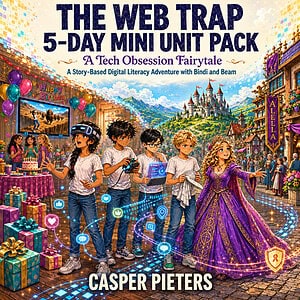
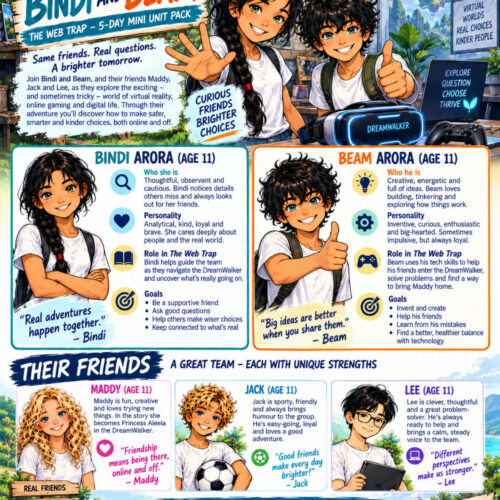
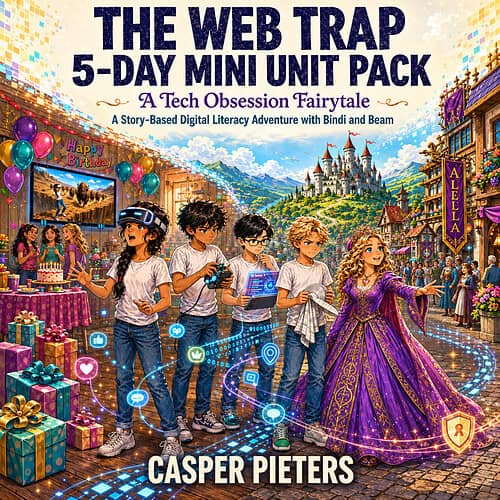
  • This is a colorful, comic-style “Meet Bindi and Beam” character introduction page for The Web Trap: 5-Day Mini Unit Pack. It combines character profiles with the unit’s themes of friendship, virtual reality, digital choices and healthier technology use. At the top, a large wooden sign reads “Meet Bindi and Beam,” with “The Web Trap – 5-Day Mini Unit Pack” underneath. Bindi and Beam stand beside the sign in a bright workshop filled with technology and glimpses of a fantasy virtual world. Bindi has long black hair in a single braid, green eyes, a white T-shirt and backpack. She reaches toward the reader and says, “Hi! I’m Bindi!” Beam has messy black hair, blue-green eyes, a white T-shirt and backpack. He gives a thumbs-up and says, “G’day! I’m Beam!” A glowing DreamWalker virtual-reality headset sits prominently in front of them. An introductory panel explains that Bindi, Beam and their friends Maddy, Jack and Lee explore the exciting and sometimes difficult worlds of virtual reality, online gaming and digital life. Their adventure encourages learners to think about safer, smarter and kinder choices both online and offline. Nearby handwritten messages emphasize curiosity, friendship and brighter choices. The middle of the page contains two large character profiles. Bindi Arora, age 11, is described as thoughtful, observant and cautious. She notices details others miss, cares deeply about her friends and helps guide the team through the DreamWalker experience. Her goals include being a supportive friend, asking good questions, helping others make wiser choices and staying connected to what is real. Her quote reads, “Real adventures happen together.” Beam Arora, also age 11, is creative, energetic and full of ideas. He enjoys building, tinkering and discovering how things work. He uses his technical skills to help the group enter the DreamWalker, solve problems and find a way to bring Maddy home. His goals include inventing, helping his friends, learning from mistakes and finding a healthier balance with technology. His quote reads, “Big ideas are better when you share them.” The lower section, titled “Their Friends,” introduces three more characters. Maddy is a curly blonde girl who loves trying new things and becomes Princess Aleela inside the DreamWalker. Her message emphasizes friendship and being there for one another both online and offline. Jack is a cheerful, curly-haired blond boy holding a soccer ball. He is sporty, friendly, humorous and loyal. Lee has short black hair, glasses and holds a tablet. He is clever, thoughtful and a strong problem-solver who brings a calm perspective to the team. The page ends with a bright coastal landscape surrounded by flowers and greenery. A central banner reads, “Explore • Reflect • Create • Make a Difference.” Wooden signs on the left say “Real Friends,” “Mindful Tech,” “Kinder Communities” and “Brighter Tomorrows.” On the right, a handwritten message says that a brighter tomorrow starts with the choices we make today. Overall, the page introduces the five young characters while connecting their personalities and roles directly to the 5-Day Mini Unit Pack’s central themes: friendship, thoughtful technology use, questioning digital experiences, reflection and making responsible choices.A colourful, square comic-style cover for The Web Trap – 5-Day Mini Unit Pack: A Tech Obsession Fairytale. Five young characters stand between two worlds: a cheerful birthday party filled with balloons, presents and cake on the left, and a magical medieval village with a magnificent castle on the right. Bindi wears a virtual reality headset, while Beam and his friends investigate glowing digital devices. Beside them, a smiling princess in an elaborate purple gown reaches towards the fantasy world. Glowing circuits, floating social media icons and digital pathways connect both settings, symbolising the blending of virtual reality and everyday life. The illustration introduces a story-led digital literacy adventure exploring immersive technology, friendship, digital temptation and the importance of balancing virtual experiences with real-world relationships.

    Story-led Unit: Tech obsession 9+

    The Web Trap 5-Day Mini Unit Pack is a ready-to-use, story-based learning resource for ages 9–12 that helps children explore screen balance, digital wellbeing, attention, virtual identity and real-world connection. Selected story chapters are included,…

    Man speaking and gesturing with hands, casual attire, white brick wall background.
    $13.00 Add to cart
0