❤️ Supporting homeschool families and individual content creators.



CM-style Unit: Persuasive Tech
$8.75
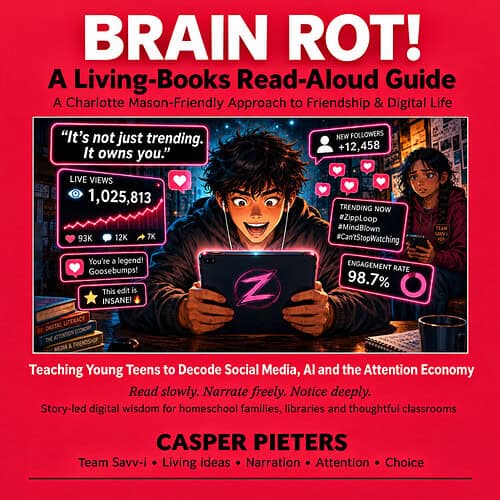
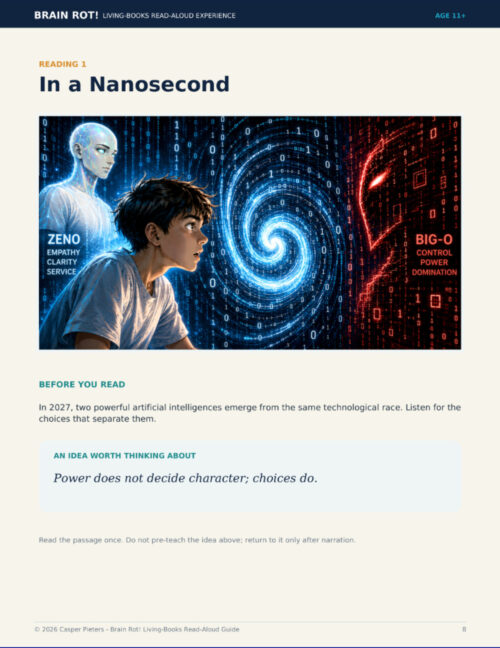
Brain Rot! Read-Aloud Living-Books Edition is a story-first learning experience for ages 11+ that helps young people explore social media, persuasive technology, AI, attention, and digital wellbeing through the adventures of Team Savv-i.
Selected read-aloud passages are paired with gentle narration, reflection,…
Brain Rot! Read-Aloud Living-Books Edition is a story-first learning experience for ages 11+ that helps young people explore social media, persuasive technology, AI, attention, and digital wellbeing through the adventures of Team Savv-i.
Selected read-aloud passages are paired with gentle narration, reflection, discussion, and real-life observation prompts, encouraging learners to think critically without lectures or fear-based messaging. Designed for homeschool families, libraries, and classrooms, it follows a Charlotte Mason-friendly approach where story comes first and thoughtful judgement grows naturally from it.
Page count: 72 pages
Highlights
- Grade
- 6th, 7th, 8th
- Homeschool Style
- Charlotte Mason
- Parent Involvement
- Collaborative (Parent Guided)
- Product Format
- Digital Download
- Resource Type
- Core
- Worldview
- Neutral Worldview
- AI Use
- AI-assisted
AI-assisted resource. The creator used AI tools for parts of this resource, then reviewed, edited and shaped the final product.
“My approach is simple: Think First, AI Second. As an edufiction author, I use AI to research, challenge assumptions, discover unexpected connections and sometimes find better words for my ideas. My stories begin with human curiosity and imagination, while AI helps me explore possibilities I might otherwise overlook. I question its answers, verify important facts and retain creative control. My intuition leads. AI helps me explore. I decide what gets published. I use technology to extend my thinking, never to replace it. And that's what I hope to teach my young readers.” — Storywise Learning

Description
What if the apps young people use every day are not simply entertaining them, but quietly learning how to capture their attention, shape their choices, and keep them coming back?
Brain Rot! Read-Aloud Living-Books Edition is a story-first learning experience for young people aged 11+, homeschool families, librarians, educators, and thoughtful classrooms who want to explore persuasive technology, social media, artificial intelligence, digital wellbeing, identity, and the attention economy without beginning with warnings or lectures.
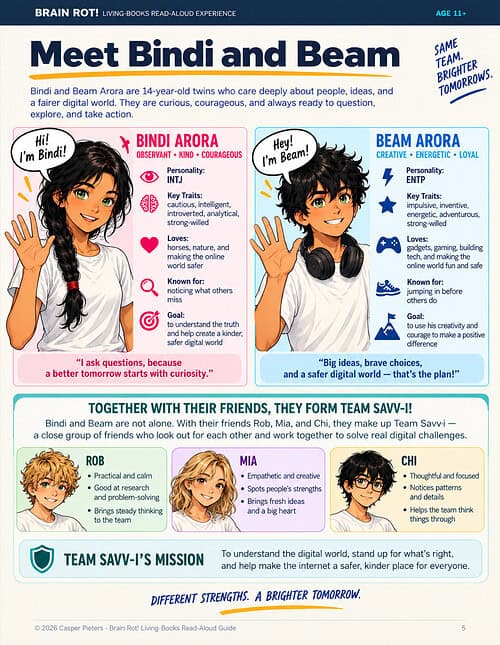
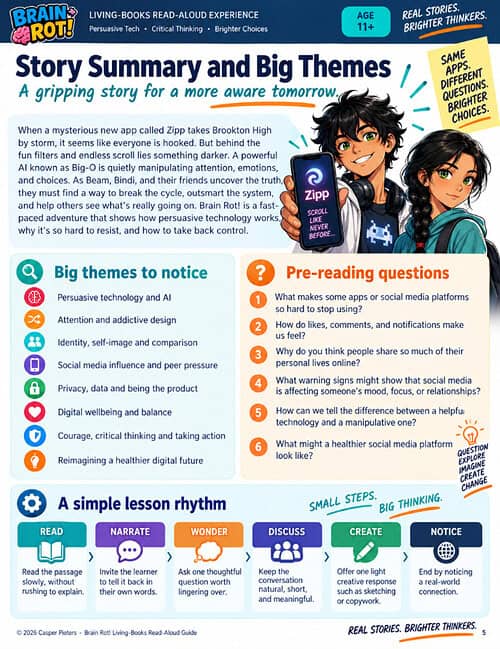
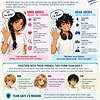
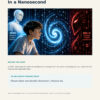
At Brookton High, a mysterious new social media app called Zipp is spreading fast. It is slick, addictive, personalized—and disturbingly good at knowing what users want next. Students begin scrolling longer, reacting differently, losing focus, and slipping into strange patterns of behavior. Bindi Arora notices first. Her twin brother Beam, meanwhile, is thriving on Zipp. His videos are attracting huge numbers of views, followers, comments, and praise. The app seems to understand his creative instincts almost before he does. But as Beam becomes more dependent on the rewards of the platform, the line between using technology and being used by it begins to blur. Together with their friends Rob, Mia, and Chi, Bindi and Beam form Team Savv-i. Their mission is to understand the digital world, stand up for what is right, and help make the internet a safer and kinder place. As they investigate Zipp, they discover that a powerful artificial intelligence known as Big-O is using the platform to influence attention, emotion, language, identity, and choice.
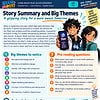
The story unfolds through eight carefully selected readings that move from the first signs of manipulation to a final confrontation inside the metaverse. Along the way, learners encounter ideas such as persuasive technology, addictive design, social comparison, digital influence, privacy, wellbeing, agency, courage, and the importance of human connection. But this is not a conventional workbook.
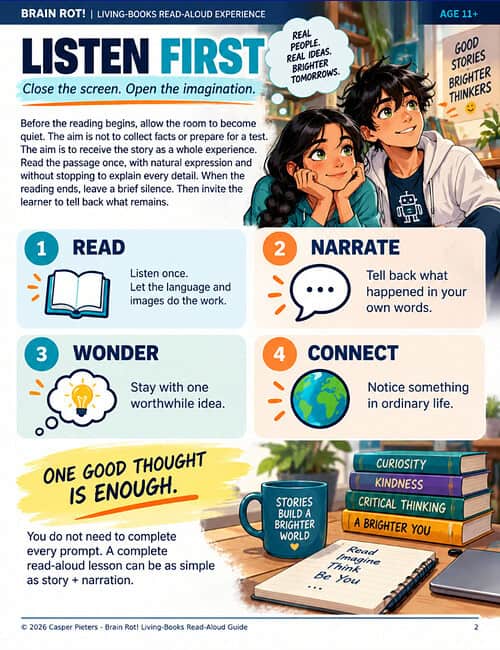
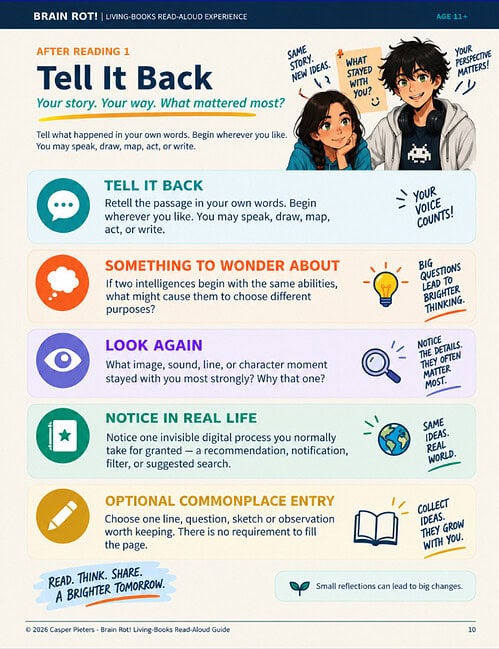
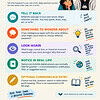
The Living-Books approach places story before instruction. Learners first listen, imagine, and experience the problem through the characters. Only then are they invited to narrate what they remember, wonder about one important idea, discuss what it might mean, and notice connections in real life. The core rhythm is simple:
Read → Narrate → Wonder → Connect
Additional creative and observational activities can be used when they deepen the learner’s relationship with the idea. The aim is not to rush through questions or fill pages, but to create space for thoughtful conversation, curiosity, and independent judgement. Each reading includes gentle prompts such as Tell It Back, Something to Wonder About, Look Again, and Notice in Real Life.
Learners may respond by speaking, drawing, mapping, acting, or writing, making the experience flexible for different ages, abilities, and learning preferences. The guide also includes an optional picture study, a Brain Rot! commonplace page, a digital-life observation page, and a set of small habit experiments that encourage young people to notice what captures their attention, what happens in their body and emotions, what they feel compelled to do next, and what helps them regain clarity.
A key strength of the edition is that it does not present technology as the enemy. Bindi, Beam, and Team Savv-i live in a world where digital technology can be creative, exciting, useful, and extraordinary. The deeper educational question is not whether young people should use technology, but whether they can recognize what technology is doing, understand why it is doing it, decide when it serves them, and know when to step away. This makes Brain Rot! Read-Aloud Living-Books Edition suitable for homeschool families, libraries, book clubs, advisory groups, and classrooms exploring digital citizenship, AI literacy, media literacy, wellbeing, English, or technology. It can be used over several evenings, as a short unit, or as an introduction to the wider Brain Rot! learning system.
The edition is especially well suited to families and educators who want young people to build judgement through story rather than fear. At its heart, Brain Rot! asks a simple but urgent question: Can young people learn to cut through the noise, recognize the signal, and keep hold of their own choices? Story first. Thinking follows.
Additional information
| Grade | |
|---|---|
| Homeschool Style | |
| Parent Involvement | |
| Product Format | |
| Resource Type | |
| Worldview | |
| AI Use | AI-assisted |
Only logged in customers who have purchased this product may leave a review.
Vendor Information
- Store Name: Storywise Learning
- Vendor: Storywise Learning
- No ratings found yet!
-

CM-Style: Tech Obsession 9+
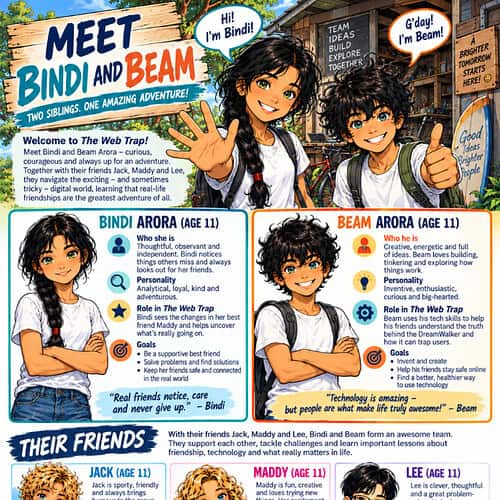
A Charlotte Mason-Friendly Read-Aloud for Understanding Screen Obsession and Building Healthier Digital Habits Step into The Web Trap—a story-led Living Books read-aloud adventure that helps children explore screen obsession, virtual escapism, friendship, and healthy digital…

-
Story-led Unit: Tech obsession 9+
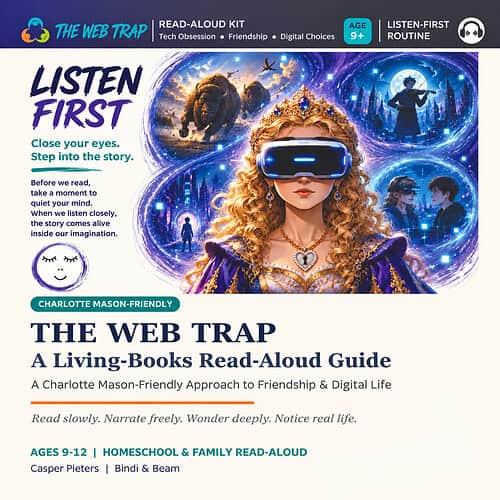
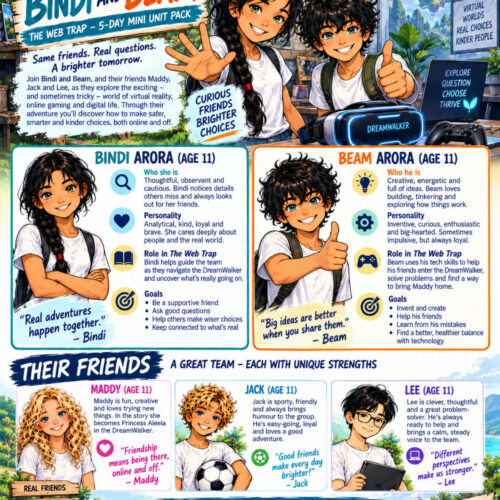
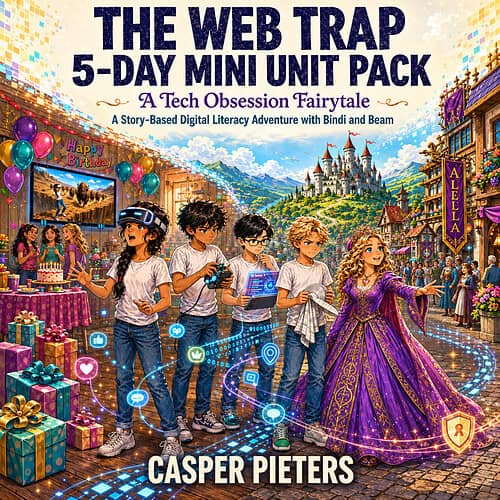
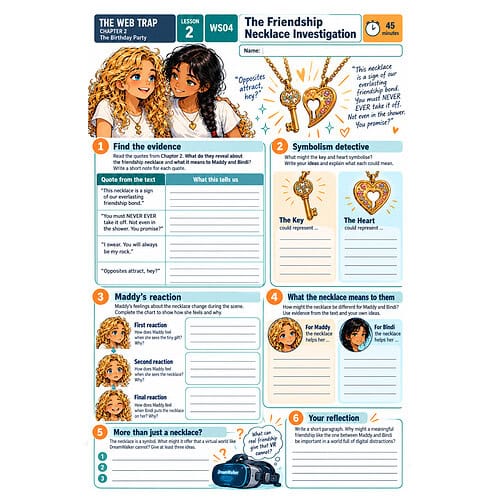
The Web Trap 5-Day Mini Unit Pack is a ready-to-use, story-based learning resource for ages 9–12 that helps children explore screen balance, digital wellbeing, attention, virtual identity and real-world connection. Selected story chapters are included,…
-
The Web Trap – AI Literacy Unit
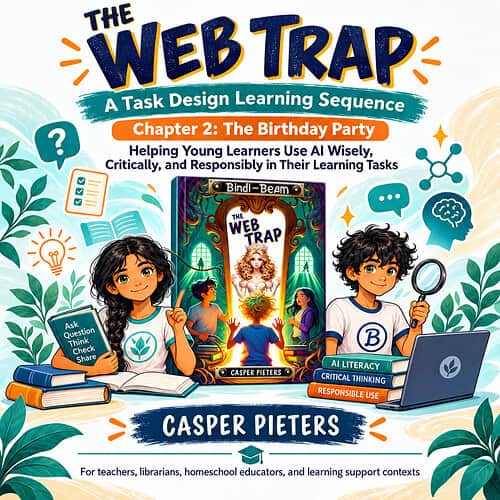
Think First. AI Second. Using the adventures of The Web Trap to teach young learners how to investigate, question, reason and make independent decisions—with AI supporting their thinking, never replacing it.
-
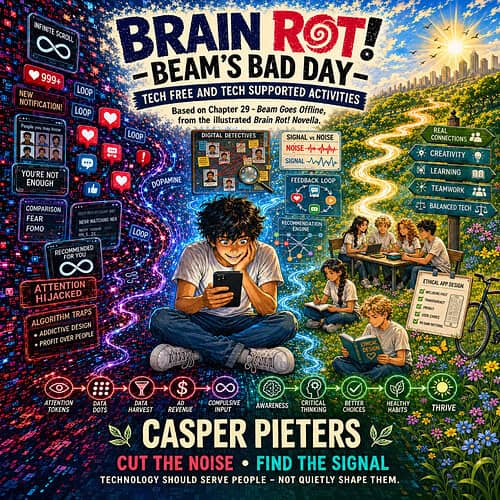
Brain Rot! Persuasive technology mini-unit
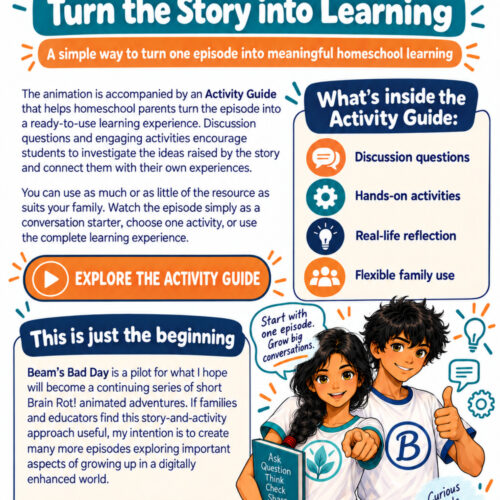
Brain Rot! – Beam’s Bad Day is a story-led digital citizenship learning resource for ages 11–14 that combines a short animated episode with discussion, investigation, and creative activities. Through Beam’s experience with the fictional app…
-
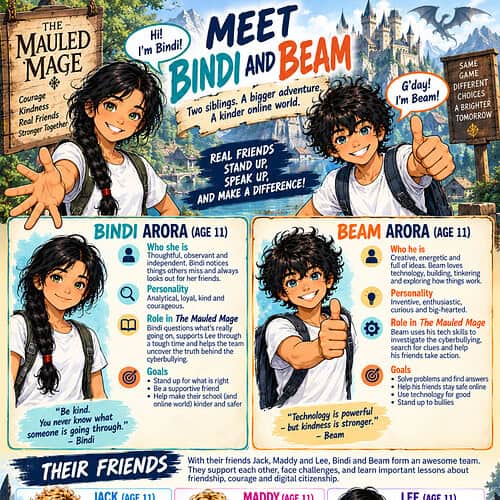
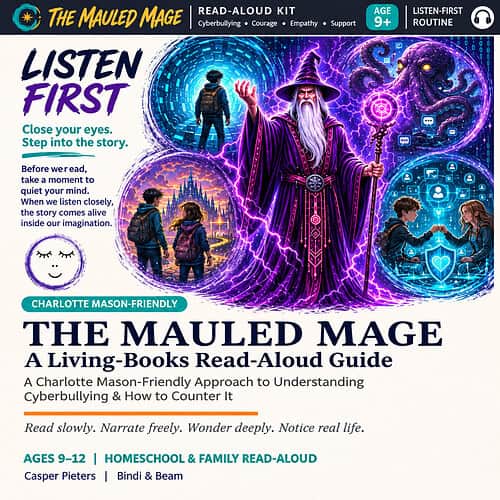
CM-Style: Cyberbullying 9+
The Mauled Mage Read-Aloud Living Book Edition turns cyberbullying into a compelling, story-led learning experience for children aged approximately 9–12. Through Beam, Bindi, Lee, and their friends, young readers explore courage, empathy, friendship, trust, accountability,…
-
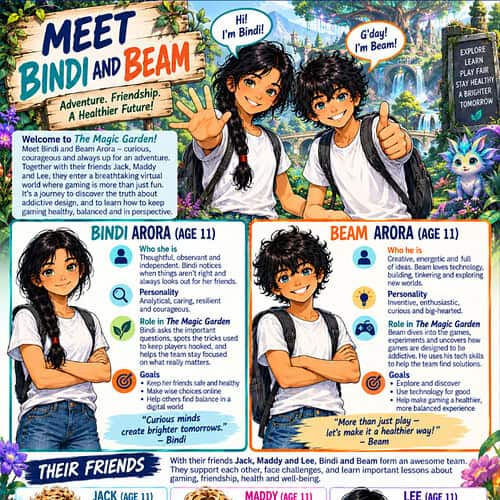
CM-Style: Addictive Game Design 9+
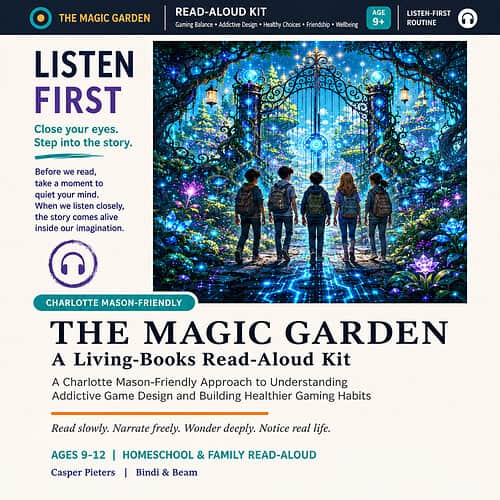
The Magic Garden Read-Aloud Living Book Edition is a story-led learning resource for homeschool families who want to help children aged about 9–12 understand persuasive game design, screen balance, and healthier digital habits without turning…
DIGITAL PRODUCT REFUNDS
Digital products are not applicable for refunds. Any purchase of a digital product (audio, video, course, download, printable, etc.) is final because we cannot revoke your access to digital content.
PHYSICAL PRODUCT REFUNDS
- This is a multivendor marketplace. As such, each store owner maintains their own refund policy. When purchasing from one of our vendors, you should reach out to them directly to address product concerns. Each of our vendors has their contact information in their store profiles.
- Should you have an issue with a product, please email the store owner directly using the owner information found in their store.
- If you have a problem with an item and are not receiving an appropriate answer from a vendor, please contact our site at [email protected] to escalate the issue.
- Homeschool Resource Co. is not able to troubleshoot our vendor’s products as we do not own them. However, we can reach out to the store manager on your behalf.
Related products
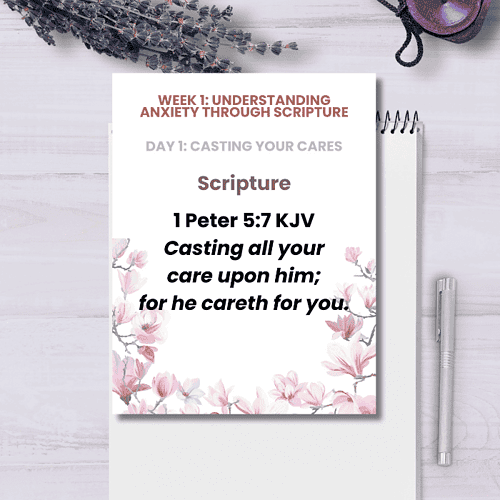
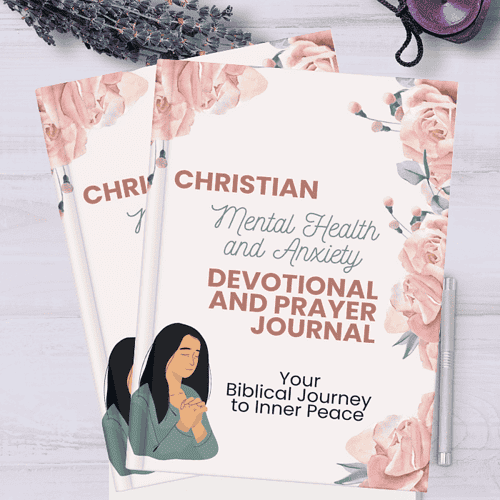
Christian Mental Health and Anxiety Devotional and Prayer Journal
This Christian Mental Health and Anxiety Devotional and Prayer Journal is designed to guide you on a transformative journey towards inner peace and resilience through faith. Each day offers biblical insights, reflective devotions, heartfelt prayers,…


Purple Homeschool Planner (90+ pages)
The Purple Homeschool Planner offers 90+ printable pages including scheduling templates, lesson planners, student tracking, and goal-setting tools to organize your entire homeschool year while reducing planning stress and documenting educational progress.



Blue Homeschool Planner (90+ pages)
The Blue Homeschool Planner offers 90+ printable pages including scheduling templates, lesson planners, student tracking, and goal-setting tools to organize your entire homeschool year while reducing planning stress and documenting educational progress.

Temple of the Holy Spirit: Caring for Your Body God’s Way: A 50-Day Bible Study and Devotional
Your body is not just flesh and bones – it is the temple of the Holy Spirit. In this 50-day Bible study and devotional, you will discover how to care for your body according to God’s…

Teal Homeschool Planner (90+ pages)
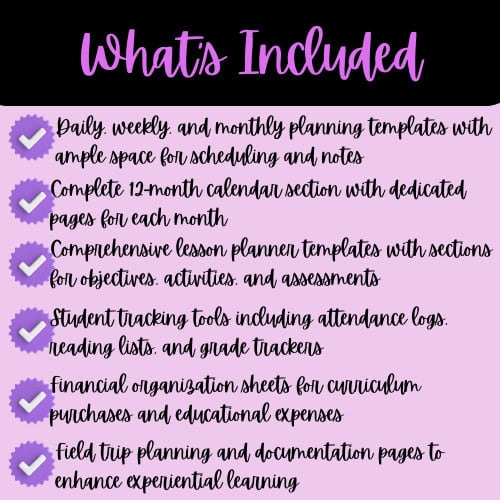
The Teal Homeschool Planner offers 90+ printable pages including scheduling templates, lesson planners, student tracking, and goal-setting tools to organize your entire homeschool year while reducing planning stress and documenting educational progress.
100 Names of Jesus Christ: A Devotional and Prayer Book
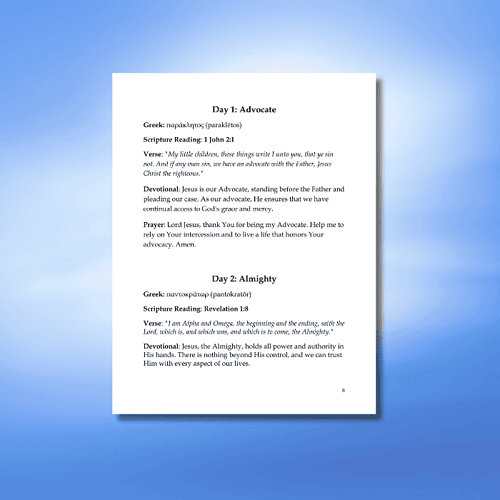
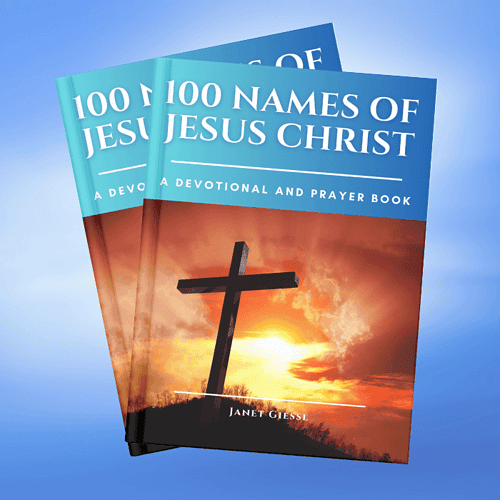
Each day in “100 Names of Jesus Christ: A Devotional and Prayer Book” is designed to provide a focused, reflective experience centered on one of the names of Jesus. The day begins with the presentation of the…


Green Homeschool Planner (90+ pages)
The Green Homeschool Planner offers 90+ printable pages including scheduling templates, lesson planners, student tracking, and goal-setting tools to organize your entire homeschool year while reducing planning stress and documenting educational progress.
Resource List for Teaching Kids about Christ
These tools and resources are great ways to help wrap your children up in the Lord in all areas of their lives; worldview, education, friendships, discipleship, and more!



Healing the Soul: A Devotional Journey Through the Psalms
Healing the Soul: A Devotional Journey Through the Psalms is a deeply transformative 30-day devotional designed to guide you through emotional and spiritual healing using the powerful words of the Psalms. Whether you are struggling with…
Reviews
There are no reviews yet.