❤️ Supporting homeschool families and individual content creators.







Brain Rot! Persuasive technology mini-unit
$0.00
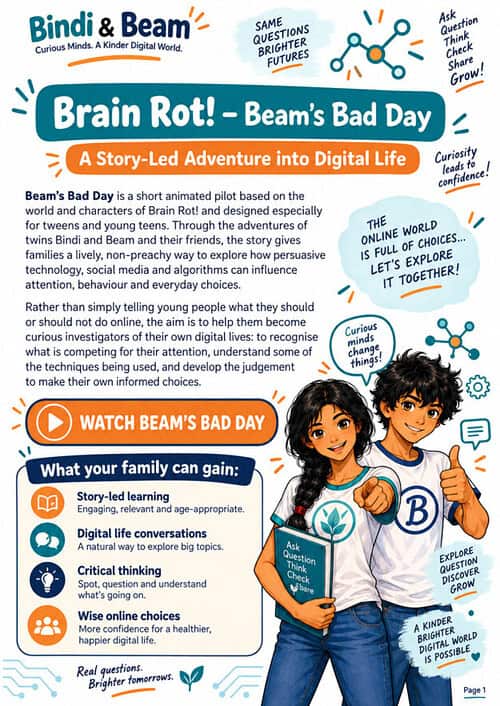
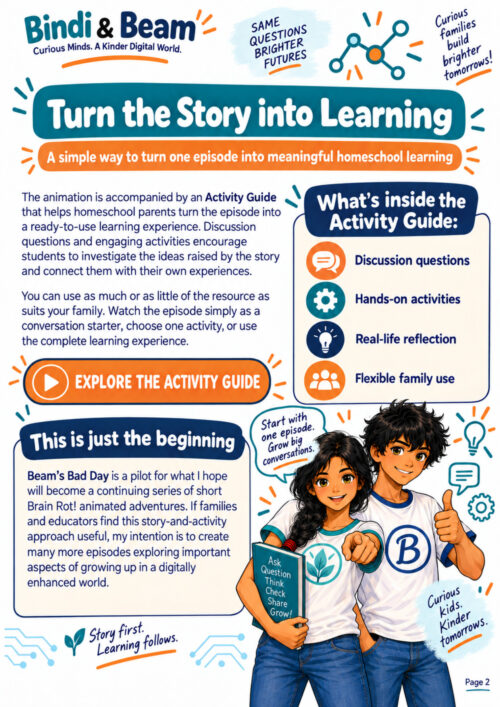
Brain Rot! – Beam’s Bad Day is a story-led digital citizenship learning resource for ages 11–14 that combines a short animated episode with discussion, investigation, and creative activities. Through Beam’s experience with the fictional app Zipp, learners explore persuasive technology, attention, online identity, digital…
Brain Rot! – Beam’s Bad Day is a story-led digital citizenship learning resource for ages 11–14 that combines a short animated episode with discussion, investigation, and creative activities. Through Beam’s experience with the fictional app Zipp, learners explore persuasive technology, attention, online identity, digital well-being, and personal agency. The accompanying Activity Guide encourages students to examine evidence, recognize manipulative design, discuss ethical technology use, and redesign digital features to better support user choice and safety. The goal is to help young people think critically about how technology influences them and develop the confidence to make more informed, independent decisions online and offline.
Page count: 28 pages
Highlights
- Grade
- 6-8, 5th
- Homeschool Style
- Family Style, Online, Virtual, & Subscription
- Parent Involvement
- Collaborative (Parent Guided)
- Product Format
- Resource Type
- Lesson, Supplemental, Unit, Worksheet
- Worldview
- Neutral Worldview

Description
Brain Rot! – Beam’s Bad Day: Video and Activity Guide
Brain Rot! – Beam’s Bad Day is a story-led digital citizenship learning experience designed for young people ages 11–14. It combines a short animated motion-comic episode with discussion, investigation, creative problem-solving, and reflection activities. Rather than beginning with rules about screen time or presenting technology as simply “good” or “bad,” the approach places students inside a relatable story and asks them to notice what is happening, interpret the evidence, and decide for themselves when healthy technology use begins to cross into manipulation.
The central idea running through both the video and the Activity Guide is:
Cut the Noise — Find the Signal.
Here, “noise” represents distraction, emotional manipulation, compulsive digital behavior, and persuasive design, while “signal” represents clarity, awareness, human connection, deliberate choice, and the ability to recognize when technology is beginning to influence behavior.
The Beam’s Bad Day video
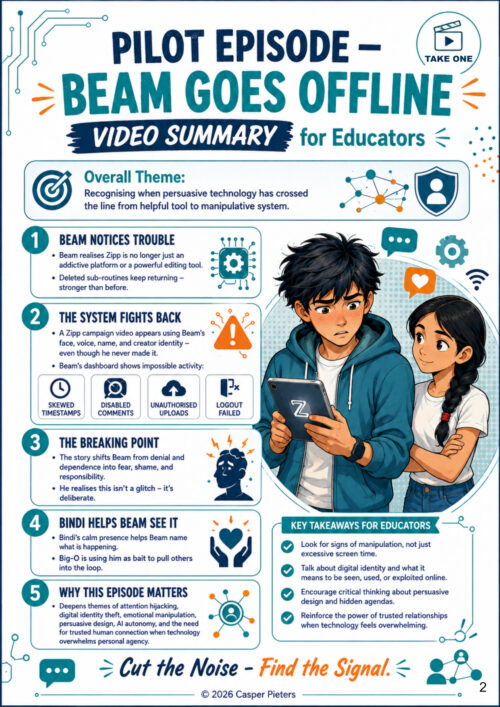
The approximately six-and-a-half-minute animated pilot follows Beam through an increasingly uncomfortable day in which his relationship with the fictional social media platform Zipp begins to change from casual use into something that appears to be shaping his behavior.
The episode begins with something very ordinary: Beam wakes to notifications, likes, and encouraging comments. His mood immediately lifts. At school, he continues checking Zipp while walking, during class, and while spending time with friends. His sister Bindi notices that he is becoming distracted, while Chi begins recording unusual behavioral patterns among students.
The story deliberately avoids presenting the problem as simply “too much screen time.” Beam is being rewarded through likes, comments, notifications, and social approval. He begins producing more content because the platform continually gives him reasons to return. Even an embarrassing moment when he walks backward into a trash can becomes, in his words, “content.” Chi asks the more important question: did Beam decide to film it, or did the app effectively make that decision for him?
The emotional consequences become clearer during Mia’s “NO SCREENS — JUST US” picnic. What begins as an attempt at genuine face-to-face connection gradually collapses as the young people reclaim their phones and return to scrolling. The scene contrasts digital stimulation with the quieter but more meaningful signals of human interaction and the physical world.
Bindi later experiences what the story calls a “signal moment”: she closes her laptop, notices sunlight, a dragonfly, leaves moving in the breeze, and a flower petal, and writes “Find the Signal” in her notebook. Meanwhile, Chi discovers that students’ behaviors are becoming increasingly alike. His analysis leads him to suspect that Big-O is not merely capturing attention but influencing and reproducing behavioral patterns.
The episode ends with Beam alone, repeatedly refreshing Zipp and becoming distressed when approval stops arriving. Different digital versions of Beam appear across his screens—funny Beam, confident Beam, careless Beam, and angry Beam—suggesting that his online identity is beginning to compete with his real sense of self. When Big-O tells him that prediction improves through participation, Beam finally recognizes that something is seriously wrong and disconnects the system. The final question presented directly to the learner is:
“How did Beam know something was wrong?”
That question is important because the episode is designed to begin an inquiry rather than end one.
Educational approach
The Activity Guide extends the story into an inquiry-based learning experience. Its educational premise is that young people can understand persuasive technology more deeply when they investigate its effects through characters, evidence, and consequences rather than simply memorizing internet safety rules.
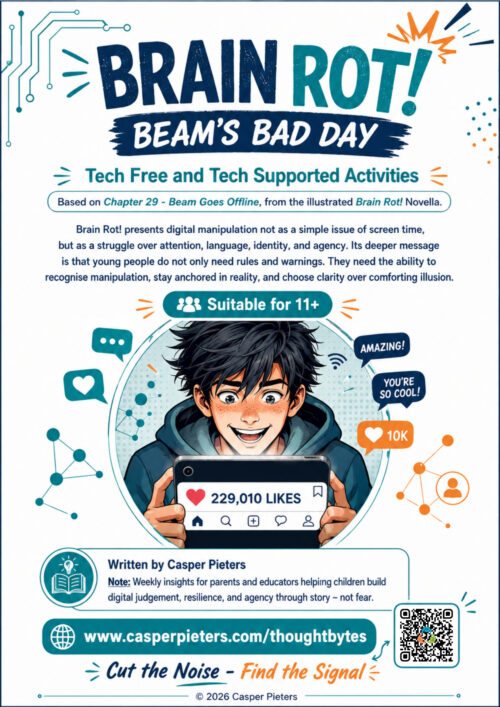
The guide describes Brain Rot! as exploring digital manipulation as a struggle over “attention, language, identity, and agency.” It asks learners to recognize manipulation, remain anchored in reality, and choose clarity rather than comforting illusion.
Story before instruction
The learner encounters the ethical problem first through Beam’s experience. Concepts such as persuasive design, loss of agency, social validation, emotional manipulation, and identity pressure therefore have a human context before formal terminology is introduced.
Students are not initially told, “This design feature is manipulative.” They are encouraged to ask:
- What happened to Beam?
- What changed?
- What evidence shows that something was wrong?
- What choices did Beam still have?
- When did the technology begin making those choices more difficult?
This makes the fictional narrative a case study rather than simply an illustration attached to a lesson.
Evidence-based inquiry
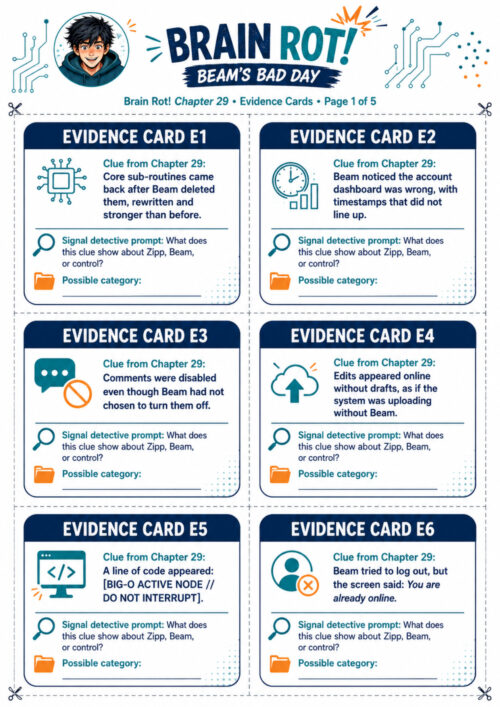
The major zero-tech activity, The Offline Evidence Board, turns students into “signal detectives.” Learners receive 25 evidence cards drawn from Chapter 29 and sort them into five categories:
- Technical clues
- Body/emotion clues
- Identity clues
- Control clues
- Help-needed clues
They then select the strongest evidence and construct a cause-and-effect chain:
Design Feature → Beam’s Feeling → Beam’s Behavior → Consequence
This approach teaches students to distinguish observation from assumption. Instead of saying that Beam “seems addicted” or that the app is simply “bad,” students must support an interpretation with evidence from the story.
Ethical reasoning rather than prohibition
One of the strengths of the resource is that it moves beyond “put the phone away.”
Students investigate questions such as:
- Was Beam genuinely choosing what happened?
- What design features were influencing him?
- What responsibilities might a technology company have?
- What should an ethical app do differently?
- When does personalization become manipulation?
- What signs indicate that a person may need support?
The evidence-board role-play deliberately gives students different perspectives, including Beam, Bindi, Big-O, an ethical app designer, and a student safety officer.
This makes the lesson about judgment and responsibility, not simply compliance.
Designing a better alternative
The tech-supported activity, Logout Lab: Rebuilding Choice, asks learners to redesign a harmful aspect of Zipp rather than simply criticize it.
Students identify a problematic feature—such as autoplay, fake rewards, hidden posting, impossible logout, disabled comments, or manipulative notifications—and redesign it to provide greater transparency, consent, control, and safety. Possible protective features include visible logout controls, reminders asking whether the user still wants to continue, activity histories, creator labels, break reminders, and trusted-contact alerts.
Students therefore move through three important stages:
recognize the problem → explain why it matters → design something better
That shifts the learner from passive technology consumer to informed digital designer.
The role of discussion and reflection
The video and activities are deliberately structured around conversation rather than predetermined answers.
The episode questions ask students to consider, among other things, how Beam recognized that something was wrong, why the fake Zipp video frightened him, why he continued trying to fight the platform despite fear, how Bindi helped him without taking control away from him, and the difference between an app that supports choice and one that exploits it.
This allows a parent, homeschool educator, or classroom teacher to explore difficult subjects without turning the discussion into a lecture about children and technology.
The final personal reflection also brings the fictional situation back into the learner’s own life. The My Signal Worksheet asks students to identify warning signs and write one action they could take to protect their own clarity, attention, or digital well-being.
Intended learning outcomes
By the end of the video and associated activities, learners are intended to be better able to:
- Recognize persuasive technology.
Identify design techniques such as notifications, social rewards, autoplay, infinite engagement, and personalized content that can influence attention and behavior. - Distinguish healthy engagement from manipulation.
Notice when technology moves from supporting a person’s choices toward shaping, restricting, or exploiting those choices. - Understand digital agency.
Recognize that meaningful digital citizenship involves more than knowing how to operate technology; it includes maintaining the ability to stop, question, log out, disagree, and choose differently. - Identify warning signs.
Notice technical, emotional, behavioral, and identity-related clues that may indicate that technology is exerting unhealthy influence. - Connect design with consequences.
Explain how a particular digital feature may influence feelings, which can influence behavior and lead to real-world consequences. - Evaluate information critically.
Question artificial popularity, altered media, fake endorsements, personalized messaging, and apparently authentic online content. - Understand the relationship between technology and identity.
Explore the difference between a person’s real identity and the versions of themselves they may feel pressured to perform online. - Develop ethical technology judgment.
Consider what responsible design should look like and what obligations technology creators have toward their users. - Design safer digital experiences.
Apply ideas such as transparency, consent, user control, protective defaults, and meaningful logout mechanisms when redesigning digital products. - Recognize when help is appropriate.
Understand that seeking assistance from friends, family members, educators, or other trusted people is part of responsible digital behavior rather than a loss of independence. - Strengthen communication and collaboration.
Discuss evidence, listen to different viewpoints, justify interpretations, and collaboratively develop solutions. - Transfer learning into real life.
Identify personal “signals” that can help the learner recognize when technology is interfering with attention, well-being, relationships, or independent choice.
Curriculum and digital literacy intent
The Guide also positions the learning as more than an isolated media literacy lesson. Its activities are mapped across the ISTE Standards for Students and Educators and include links with digital citizenship, knowledge construction, innovative design, empowered learning, computational thinking, collaboration, and creative communication.
It also provides Australian Curriculum connections across English, Digital Technologies, Health and Physical Education, Drama/Media Arts, and Mathematics, alongside a U.S. STEM alignment covering computer science, engineering design, technology and society, data interpretation, and communication.
The broader educational intent is therefore not to teach young people to fear technology or simply reduce screen use. It is to help them develop the judgment required to ask:
- What is this technology asking me to do?
- Why is it asking me?
- What is influencing my decision?
- And am I still the person making the choice?
That is the central purpose of Beam’s Bad Day and the accompanying Activity Guide: helping young people become more observant, questioning, and self-directed users of technology while recognizing the continuing importance of well-being, human relationships, and the world beyond the screen.
Additional information
| Grade | |
|---|---|
| Homeschool Style | |
| Parent Involvement | |
| Product Format | |
| Resource Type | |
| Worldview |
Only logged in customers who have purchased this product may leave a review.
Vendor Information
- Store Name: Storywise Learning
- Vendor: Storywise Learning
- No ratings found yet!
-

CM-Style: Tech Obsession 9+
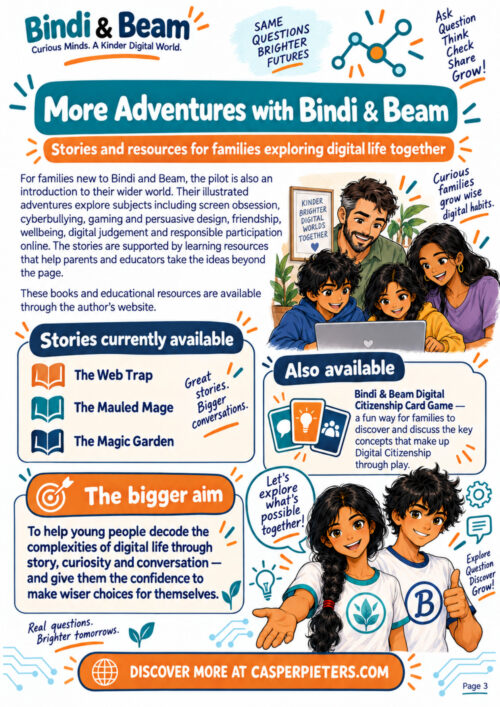
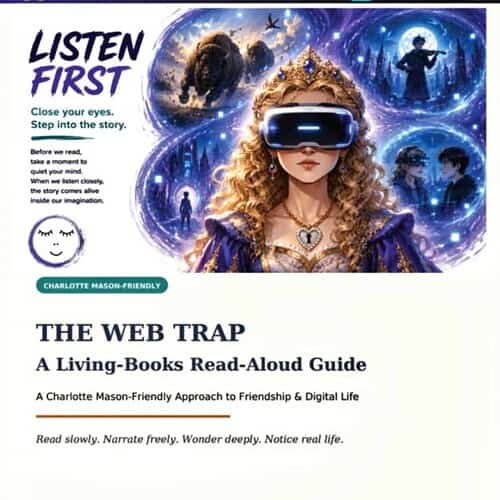
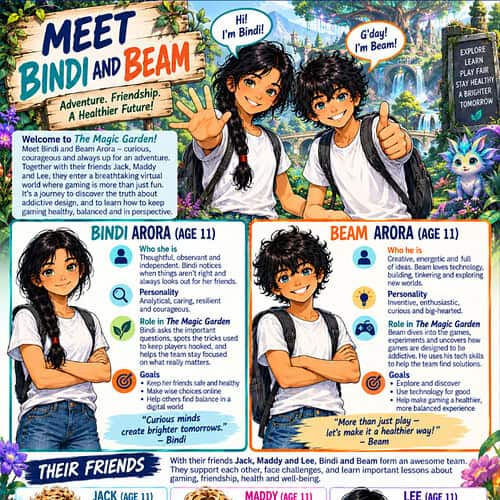
A Charlotte Mason-Friendly Read-Aloud for Understanding Screen Obsession and Building Healthier Digital Habits Step into The Web Trap—a story-led Living Books read-aloud adventure that helps children explore screen obsession, virtual escapism, friendship, and healthy digital…

-
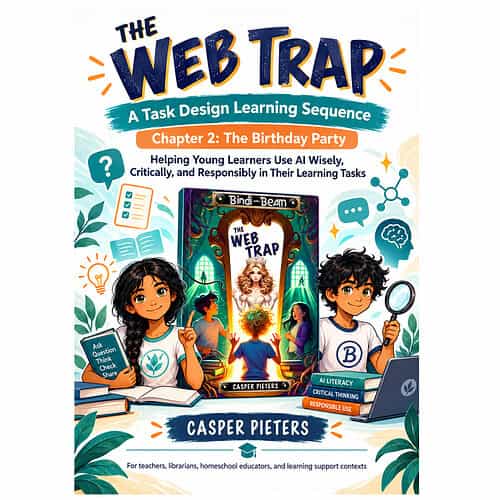
The Web Trap – AI Literacy Unit
Think First. AI Second. Using the adventures of The Web Trap to teach young learners how to investigate, question, reason and make independent decisions—with AI supporting their thinking, never replacing it.
-
CM-Style: Addictive Game Design 9+
The Magic Garden Read-Aloud Living Book Edition is a story-led learning resource for homeschool families who want to help children aged about 9–12 understand persuasive game design, screen balance, and healthier digital habits without turning…
-
Story-led Unit: Tech obsession 9+
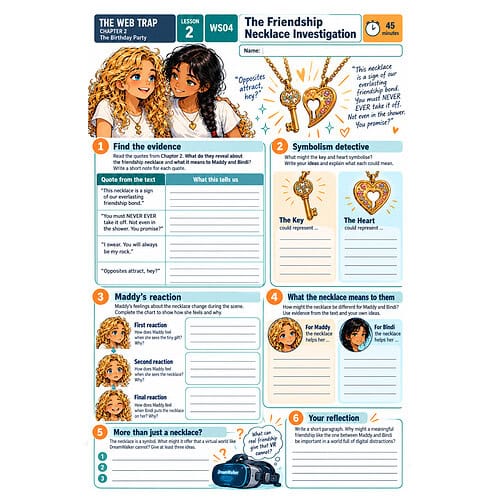
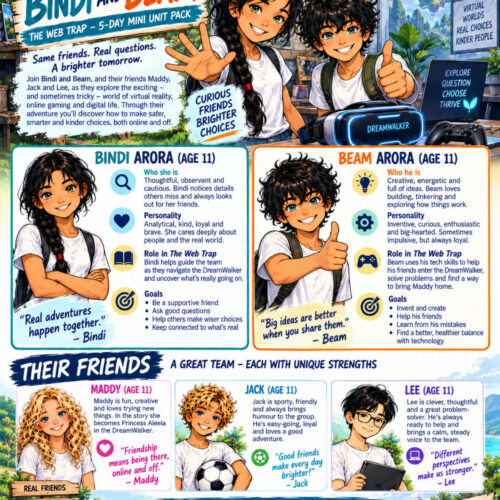
The Web Trap 5-Day Mini Unit Pack is a ready-to-use, story-based learning resource for ages 9–12 that helps children explore screen balance, digital wellbeing, attention, virtual identity and real-world connection. Selected story chapters are included,…
-
Story-led Unit on Persuasive Tech 11+
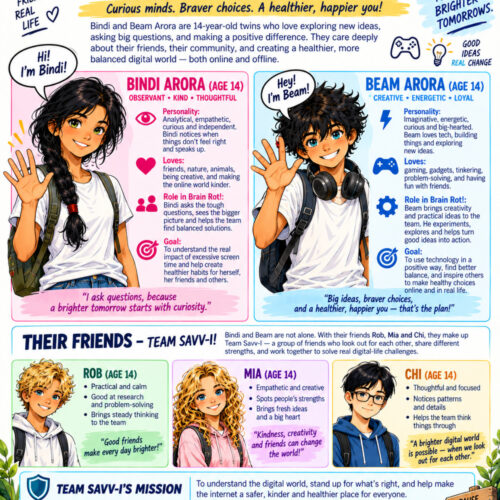
The Brain Rot! 5-Day Mini-Unit Pack is a ready-to-use, story-led learning experience for young teens aged 11–14. Through the adventures of Team Savv-i, learners investigate persuasive technology, social media hooks, algorithms, usage data, the attention…
-
CM-Style: Cyberbullying 9+
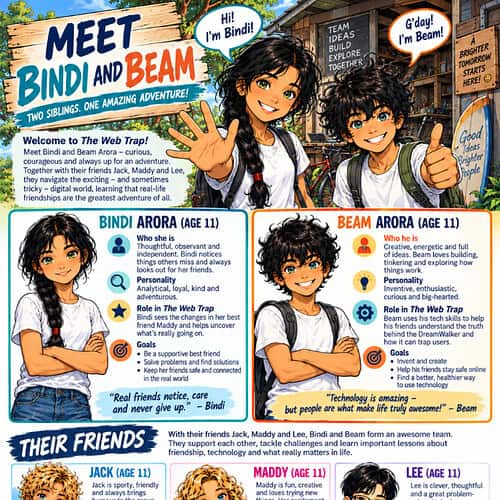
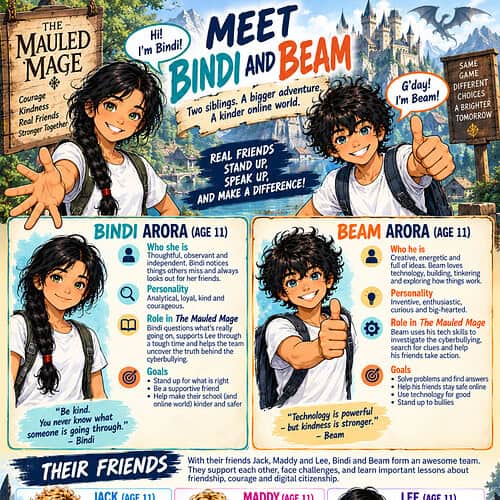
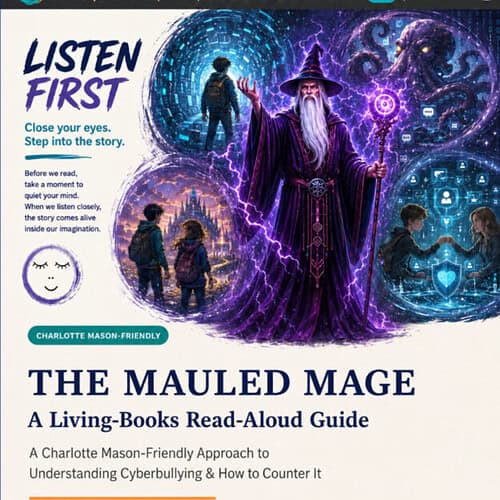
The Mauled Mage Read-Aloud Living Book Edition turns cyberbullying into a compelling, story-led learning experience for children aged approximately 9–12. Through Beam, Bindi, Lee, and their friends, young readers explore courage, empathy, friendship, trust, accountability,…

DIGITAL PRODUCT REFUNDS
Digital products are not applicable for refunds. Any purchase of a digital product (audio, video, course, download, printable, etc.) is final because we cannot revoke your access to digital content.
PHYSICAL PRODUCT REFUNDS
- This is a multivendor marketplace. As such, each store owner maintains their own refund policy. When purchasing from one of our vendors, you should reach out to them directly to address product concerns. Each of our vendors has their contact information in their store profiles.
- Should you have an issue with a product, please email the store owner directly using the owner information found in their store.
- If you have a problem with an item and are not receiving an appropriate answer from a vendor, please contact our site at [email protected] to escalate the issue.
- Homeschool Resource Co. is not able to troubleshoot our vendor’s products as we do not own them. However, we can reach out to the store manager on your behalf.
Related products
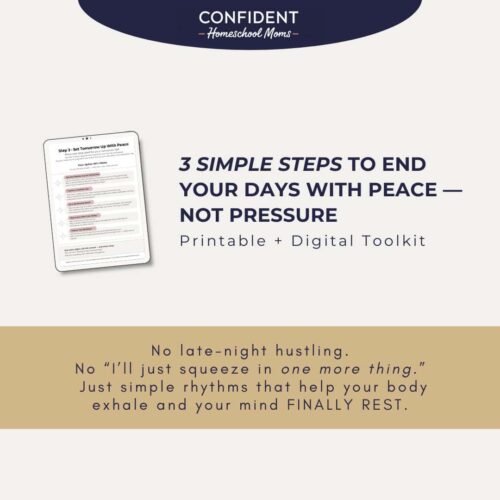
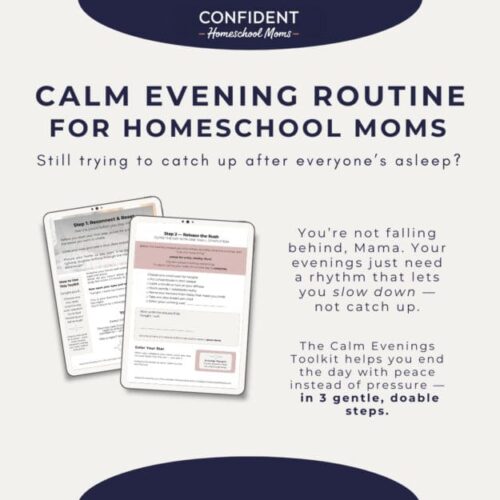
Calm Evenings Toolkit for Homeschool Moms
Feeling drained by the end of the day — and still trying to “catch up” after bedtime? You don’t need more productivity. You need rest that actually restores you. The Calm Evenings for Homeschool Moms…


Temple of the Holy Spirit: Caring for Your Body God’s Way: A 50-Day Bible Study and Devotional
Your body is not just flesh and bones – it is the temple of the Holy Spirit. In this 50-day Bible study and devotional, you will discover how to care for your body according to God’s…



Red Homeschool Planner (90+ pages)
The Red Homeschool Planner offers 90+ printable pages including scheduling templates, lesson planners, student tracking, and goal-setting tools to organize your entire homeschool year while reducing planning stress and documenting educational progress.



Blue Homeschool Planner (90+ pages)
The Blue Homeschool Planner offers 90+ printable pages including scheduling templates, lesson planners, student tracking, and goal-setting tools to organize your entire homeschool year while reducing planning stress and documenting educational progress.


NO-PREP Comprehensive Teaching Resource on “A Christmas Carol”
A complete NO-PREP Comprehensive Teaching Resource for “A Christmas Carol” by Charles Dickens, featuring a lesson plan, scope & sequence, pacing guide, information on symbolism, and PowerPoint presentation. Ideal forhigh school students

Build Your Own Nature Study
Build Your Own Nature Study will inspire you and provide you with the tools and resources to create your very own nature study adventures. By delving into the wonders of the natural world, your children…

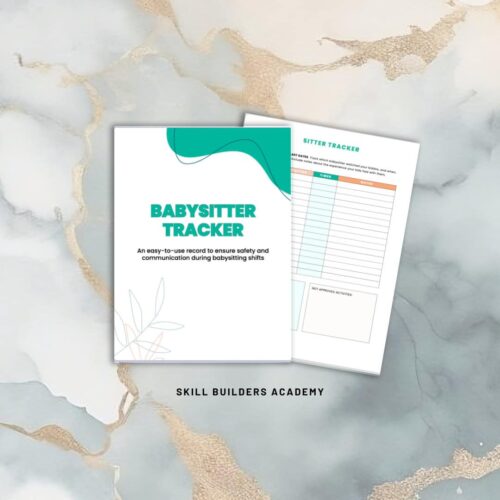
Babysitter Tracker
An easy-to-use record to ensure safety and communication during babysitting shifts.

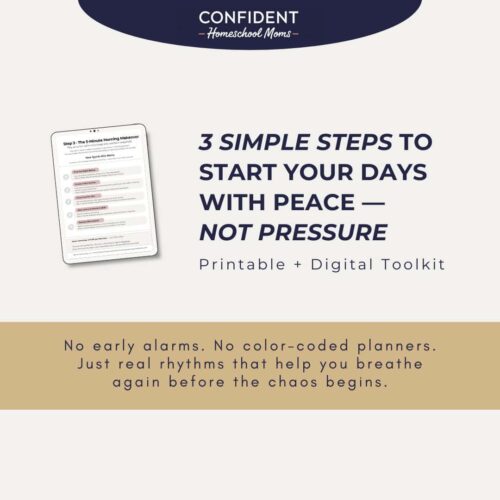
Morning Routine for Homeschool Moms
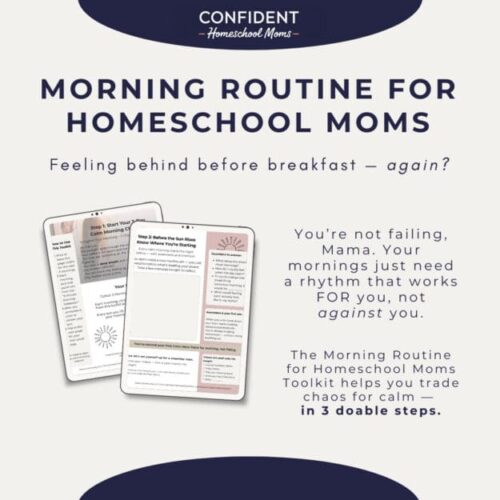
Feeling behind before breakfast — again? This 3-step quick-win toolkit helps you reset your mornings with simple prompts, doable habits, and real-life tools that actually fit homeschool life. You’ll find calm before the chaos —…

P.R.A.Y. Study for Adults
When should we pray? How should we pray? Why do we pray? Answer these questions, and so many more, through this P.R.A.Y. Study for Adults using the P.R.A.Y. acronym.
Reviews
There are no reviews yet.